 Posted by Jan Kleinert, Developer Relations Engineer, Android for Cars
Today, the games category for Android Auto and cars powered by Android Automotive OS with Google built-in is officially graduating from beta to general availability. Our early access partners have already been bringing games to the parked-only experience for cars, and you can browse these in our latest collections of games for Android Auto and games for Android Automotive OS.

Bringing your game to cars lets you reach users in their vehicles during natural downtime, such as while waiting at a charging station or for a curbside order pickup. Today's milestone means that we're opening up access so developers can now publish games to the open testing and production tracks on Google Play. In this post, we'll cover how to adapt your existing Android game for the car screen, focusing on key technical requirements and publishing criteria.
Implement car support for your game
If you're already following best practices for building adaptive apps, bringing an existing Android game to cars primarily involves configuring your app manifest and ensuring your game respects the vehicle parked state.
Mark your app as a game
To distribute your app in the games category, you need to explicitly declare its category. Add the android:appCategory="game" attribute to the <application> element of your manifest file:
<application ...
    android:appCategory="game">
    ...
</application>
Declare support for Android Auto
Games are supported on Android Auto on devices running Android 15 and higher. To declare that your game supports Android Auto, include this <category> element in the intent filter of an activity in your manifest file:
<activity ...
    <intent-filter>
        <action android:name="android.intent.action.MAIN" />
        ...
        <category android:name="android.intent.category.CAR_LAUNCHER" />
    </intent-filter>
</activity>
Generally, the android.intent.category.CAR_LAUNCHER category element is placed in the same intent filter as the android.intent.category.LAUNCHER element, but it can be in another activity's intent filter if you prefer to launch a different activity.
Declare support for Android Automotive OS
To declare that your game supports Android Automotive OS, include the android.hardware.type.automotive <uses-feature> element in your manifest file.
<manifest ...
    ...
    <uses-feature android:name="android.hardware.type.automotive"
                  android:required="false" />
    ...
</manifest>
The android:required value has different restrictions depending upon which track you choose to distribute your Android Automotive OS app. If you distribute your Android Automotive OS app on the mobile track, android:required must be set to "false". However, if you distribute on the Android Automotive OS dedicated track, you can set android:required to "true", "false", or leave it unset. Leaving the value unset has the same effect as setting android:required to "true", and means that your app is available only for distribution on Android Automotive OS devices.
Handle the parked state
Cars introduce a unique physical context with a driving state and a parked state. Certain types of apps, like games, are considered parked apps and aren't permitted to run while the vehicle is in motion to avoid driver distraction. By default, Android Auto and Android Automotive OS block activities from being used or launched when the vehicle is in motion or when user experience (UX) restrictions are active. To make sure your game complies with driver distraction guidelines, don't include the distractionOptimized metadata element in any activity in your manifest. You must also ensure that your game audio stops when the user starts driving and can't be unpaused while the vehicle is in motion.


Additionally, when the user relaunches the app from the home screen, your game must restore the app state as closely as possible to the previous state. Test your game for responsiveness and ensure it doesn't freeze or stutter during gameplay.
Declare game controller support
Car screens support touch input, but many users prefer playing with a connected gamepad. If your game supports controller input, declare the android.hardware.gamepad feature in your manifest to help boost the visibility of your app in the Google Play Store to users specifically seeking controller-compatible experiences.
<uses-feature android:name="android.hardware.gamepad" android:required="false"/>Set the android:required attribute to false to indicate your app supports controllers, but the use of controllers is optional. Don't set the android:required attribute to true unless a controller is mandatory for your game.
Support common screen sizes and aspect ratios
Car displays come in various shapes and aspect ratios, including portrait and wide landscape screens. For a great user experience, make your game fully adaptive to different screen sizes so that it runs full screen without letterboxing or pillarboxing. For Android Auto, refer to the guidance for testing against canonical screen sizes and use bundled hardware profiles when testing with the emulator for Android Automotive OS.
Publish your game to cars
After you've implemented the necessary changes, you can opt in to Android Auto and Android Automotive OS form factors in the Google Play Console. Before submitting to production, test your game against the car app quality guidelines for games.
Use the Desktop Head Unit to test your app's Android Auto compatibility, and use the Android Automotive OS emulator to test the experience on Android Automotive OS. Your game will be reviewed against the car app quality guidelines for the games category before it is approved for open testing or production.
Get your games on the road
With the games category now generally available, it is the perfect time to optimize your titles for cars. To learn more about implementation details, review the documentation at Build games for cars.
 Discover a versatile collection of Googlebook devices featuring stunning displays, advanced processors, and premium design.
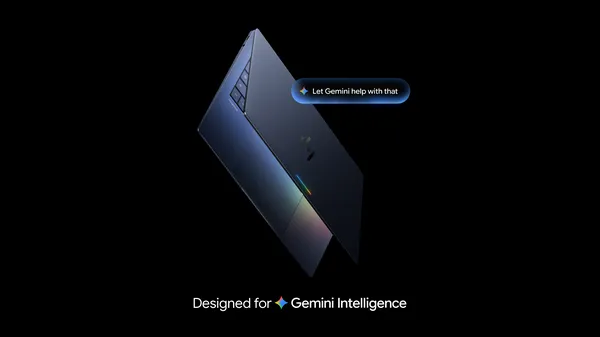 With tools like a multimodal cursor, smart dictation, and more, Googlebook anticipates your needs to simplify your day.
 Googlebook pre-orders begin September 21, and they'll be on shelves October 4.
 Earn college or continuing education credits by taking the Google AI Educator Series courses.


 We are expanding our AI & Economy team with world-class academic advisors, fellows, and core internal researchers.