A major release of the Google Ads API Developer Assistant is now available. This release transitions the assistant from a standalone project setup to a unified plugin architecture designed to bring specialized Google Ads API capabilities directly into AI agent workflows.
What is it?
The Google Ads API Developer Assistant brings deep Google Ads domain expertise into AI coding environments like Antigravity and Claude Code. It equips your AI assistant with specialized tools and guardrails. Functions include:
- Generate idiomatic code: Create tested, best-practice integration code across Python, Java, PHP, .NET, and Ruby.
- Validate GAQL queries: Automatically verifies syntax, field compatibility, date segmentation, and zero-impression rules before running queries.
- Inspect Protobuf schemas: On demand discovery of resource fields, data types, and enum definitions for any active Google Ads API version to ensure that GAQL query fields are valid.
- Troubleshoot API issues: Diagnose offline conversion upload failures, navigate manager account hierarchies, and construct Performance Max listing filters. You can pose natural language questions like “Show me all the ads in my account with problems and recommend how to fix them.”
- Answer API questions: The assistant answers questions by combining embedded Google Ads API architectural rules with dynamic, local Protobuf schema inspection to deliver version-accurate guidance and verified code snippets. It grounds its responses directly in official API definitions and client library source code rather than relying solely on general model training. An example question might be, “What is a shared set and how do I use it?”
- Adhoc reporting: You can ask for performance data in plain English, and the assistant instantly constructs, validates, and runs the required GAQL queries directly against your Google Ads account. It streams live results back into your chat as clean, formatted tables, making ad hoc reporting and metric investigations effortless. If you want to save the results, ask it to “Save results as a CSV file in <your directory>” and you can load it into a spreadsheet for analysis.
Support for Antigravity and Claude Code
This release introduces dual-platform support:
- Antigravity: Native support for Antigravity developer environments with global and workspace plugin registration.
- Claude Code: Full integration with the Claude Code CLI plugin system, including custom slash commands (such as
/validate-gaql, /inspect-object, /troubleshoot-conversions, and /get-cids).
Unified installation scripts are available for Linux, macOS (bash), and Windows (PowerShell) to provide consistent lifecycle management across all three platforms.
Improved performance
- Reduced token consumption: Progressive disclosure of rules and schemas loads only the context needed for a given task, reducing prompt token overhead.
- Faster response times: On-demand skill execution and targeted command routing deliver faster end-to-end task completion.
- Lower CPU utilization: Streamlined execution pipelines eliminate background process overhead during development sessions.
- Reduced disk I/O: Reducing the number of unneeded files in the plugin tree prevents file watchers, linters, and IDE indexers from scanning tens of thousands of unused protobuf/SDK files.
- Lower memory (RAM) footprint & zero daemon overhead: Skills and commands now run ephemerally as fast child processes only when called, dropping system resource usage to zero when idle.
- Cached API version and Protobuf schema resolution: The assistant avoids making repetitive remote metadata or reflection API calls when inspecting standard fields, resources, and enums.
- Deterministic command execution versus multi-turn LLM reasoning: Instead of the LLM guessing or iteratively debugging GAQL syntax across 3–4 round-trips, the local validator checks fields, resources, zero-impression metrics, and date clauses in a single step.
A major release built on a modern plugin architecture
This is a major release that is not compatible with prior releases. Earlier versions relied on a local workspace project structure. This version is built on a standardized plugin architecture that is installed to be globally available.
Modularizing rules, skills, and diagnostic commands into a self-contained plugin bundle allows developers to install, update, and manage the assistant across multiple environments and projects.
See the README.md for technical details on the plugin architecture.
Getting started
Because of the architectural changes in this release, review the documentation before installation:
- Read README_BEFORE_INSTALLATION.md for prerequisites and environment preparation.
- Follow the installation instructions in README.md.
We want your feedback
Share your feedback, report issues, and suggest capabilities using the survey form:
👉 Submit your feedback
Bob Hancock, Google Ads API Team
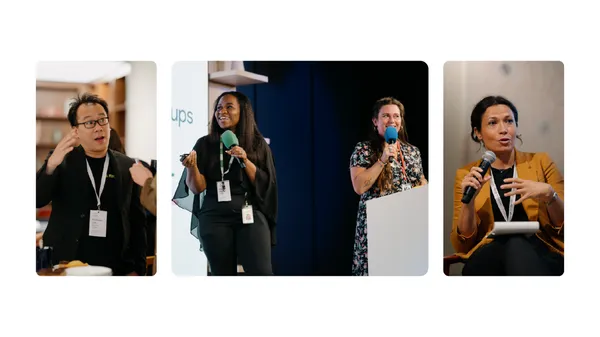 Spanning North America and Europe, the energy-focused, AI-driven startups were selected for the Google for Startups Accelerator.
 Read remarks from Kent Walker, President of Global Affairs for Google and Alphabet, to the Global Forum on Intellectual Property.
 Our new Pixel 11 phones and Pixel Watch 5 are now on shelves at the Google Store and through our retail partners.


