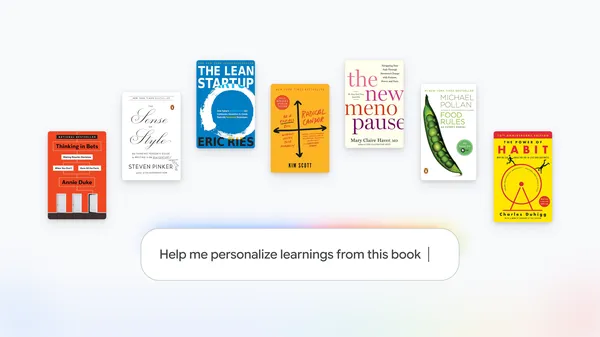
A new era for AI Search

We shared the next step in our journey to bring together the best of a search engine with the best of AI.

Source: Search


This entry was posted in Uncategorized on by .

What’s New in Wear OS 7

Posted by John Zoeller, Developer Relations Engineer


Today, we are excited to introduce Wear OS 7, a major update that brings a new era of power efficiency and intelligence to users and developers alike.

We recognize that watches are essential, all-day companions to your users. That’s why we're continuing to invest in power optimizations so your users can do more with their favorite apps. For watches upgrading from Wear OS 6 to Wear OS 7, average users can expect up to 10% improvement in battery life.

As part of a broader rollout to the Android ecosystem, select watches arriving later this year will come with Gemini Intelligence, providing proactive and personalized help to our users so they can focus on what matters.

With Wear OS 7, we’re introducing new system capabilities and enhanced developer tools. New user-facing features like Live Updates, and enhanced media controls deliver a smarter, more intuitive personalized experience on the wrist. And with enhancements to our developer toolkit such as Wear Compose 1.6 and AppFunctions, developers will be able to streamline their apps for efficient, intuitive experiences on the wrist.

Let's dive right in!

Wear OS 7 Canary

You can now try out the next version of Google’s smartwatch platform, Wear OS 7 Canary Emulator, based on Android 17 that's arriving later this year.

The new emulator allows you to get hands-on with the developer features and tools mentioned above while testing your app for compatibility with the upcoming platform.

Check out what’s changed and start testing your app today.

Explore new Wear OS features

Wear OS Widgets


Full-screen Tiles have been a go-to surface on Wear OS, providing users with instant, glanceable access to their essential updates. As the Android ecosystem moves further toward a unified vision for widgets, we’re bringing the watch closer to the rest of the Android family with the goal of minimizing efforts for developers.

Today, we’re excited to introduce the next step in the evolution of Tiles: flexible and dynamic Wear Widgets.

Powered by Jetpack Glance and the new RemoteCompose framework, Wear Widgets offer greater expressiveness and consistency with Compose than the Tiles ProtoLayout libraries. Wear Widgets support two new card layouts—small and large, that align perfectly with the 2x1 and 2x2 formats on mobile, ensuring your designs feel cohesive across devices, while still allowing you to optimize your designs for the wrist.

It’s easy to adapt the UI from the mainSlot of your full-screen tile to a 2x2 Widget. Take a look!

Check out the Widgets I/O Talk later this week for full details on the new features, and try out our Widgets Getting Started Guide to add a Widget to your Wear OS experience.

Live Updates


Wear OS 7 brings Live Updates to watches!

You can use Live Updates to surface real-time, important information from your watch or mobile app, providing your users with timely updates at a glance.

In your watch app, use Live Updates instead of the Ongoing Activities API to provide local update publishing on all Wear 7 devices. For supporting OEMs, Live Updates published by your phone app will also be bridged to users' watches.

Check out how Just Eat provides updates to their users, above!

For more information, check out Notifications on Wear OS.

Connect your app to the intelligence system

We're working on several ways for developers to provide agentic experiences on the watch, from AppFunctions to task automation tools.

We’ll announce these on our developer blog when they’re ready, and provide an all-encompassing developer guide to help you choose the right one and craft a robust implementation. For now, here's a quick look.

AppFunctions


The AppFunctions API allows developers to integrate their apps with agents and assistants, like Google Gemini, enabling users to complete tasks using voice, often replacing the need for step-by-step, manual navigation with your UI.  

For example, to start a run with the Samsung Health app, users are able to tell Gemini: “Start tracking my run.”

We’re currently running an Early Access Program for any developers who are interested. Sign up in our form to express your interest.

Task automation

Also coming soon, without any development effort at all, users will be able to invoke and track automated app tasks, for selected phone apps, directly from their watch, like placing an order with DoorDash!

Keep an eye out for these flexible options on how to prepare and connect your app to the Android intelligence system on our developer blog.

Wear Workout Tracker


We know that building a full-featured, high-quality fitness tracking experience on Wear OS from scratch is resource-intensive, so we built the all new Wear Workout Tracker experience for exercise apps. It will be included in Wear OS later in the year. 

The workout tracker provides a rich standardized workout tracking experience which includes heart rate monitoring, media control, and a collection of other useful features to help you reduce development investment while guaranteeing a high-quality experience for your users.

We’ve been working closely with ASICS Runkeeper to bring it to their users, check it out!

Enhanced System Media Controls in Wear OS 7

Wear OS 7 enhances the System Media Controls, giving users more control and seamless experiences for their media.

Per-App media auto-launch controls

Users can now personalize their media auto-launch experience per-app directly from the System Media Controls on the watch.

For any app where the user has ‘Auto-launch Settings’ toggled on, media controls will automatically appear on the watch when media is started on the phone.

Developers with an existing implementation of media apps that extend on the watch can benefit from this feature without additional effort.

Seamless audio routing with the Remote Output Switcher

Managing audio output is now easier than ever with the new Remote Output Switcher integrated into the System Media Controls. 

When listening to media on a paired phone, users can effortlessly switch the device the media is played back on directly from their wrist.

UI Library updates

To go along with all these new features for users, we’re introducing some powerful enhancements to our developer toolkits to help developers prepare for the future of Wear OS!

Compose for Wear OS 1.6

As the foundation for Wear OS development, Compose for Wear OS 1.6 has arrived.

It includes powerful updates including:

Streamlined navigation with Navigation 3

Developers can Integrate with Navigation 3 to provide a more flexible and Compose-idiomatic way to handle navigation on Wear OS.

@Composable
fun WearApp() {
    val backStack = rememberNavBackStack(MenuScreen)
    WearAppTheme {
        AppScaffold {
            val entryProvider = remember {
                entryProvider<NavKey> {
                    entry<MenuScreen> { GreetingScreen() }
                    entry<ListNavScreen> { ListScreen() }
                }
            }
            val swipeDismissableSceneStrategy = rememberSwipeDismissableSceneStrategy<NavKey>()
            NavDisplay(
                backStack = backStack,
                entryProvider = entryProvider,
                sceneStrategies = listOf(swipeDismissableSceneStrategy)
            )
        }
    }
}
List management improvements for TransformingLazyColumn

Significant improvements are here for advanced list management with TransformingLazyColumn, including enhanced padding support via the new minimumVerticalContentPadding modifier, and other new features like snapping and reverse layout.

val listState = rememberTransformingLazyColumnState()

val transformationSpec = rememberTransformationSpec()


/*

 * TransformingLazyColumn takes care of the horizontal and vertical

 * padding for the list and handles scrolling.

 */

ScreenScaffold(scrollState = listState) { contentPadding ->

    TransformingLazyColumn(

        state = listState,

        contentPadding = contentPadding

    ) {

        item {

            ListHeader(

                modifier = Modifier

                    .fillMaxWidth()

                    .transformedHeight(this, transformationSpec)

                    .minimumVerticalContentPadding(

                        ListHeaderDefaults.minimumTopListContentPadding

                    ),

                    transformation = SurfaceTransformation(transformationSpec)

            ) { Text(text = "Header") }

        }

    }

}


Optimize ambient experiences with LocalAmbientModeManager

The all new LocalAmbientModeManager is optimized for handling ambient flows, giving developers greater control over how their ambient experiences are presented to users.

override fun onCreate(savedInstanceState: Bundle?) {

    setContent {

        val ambientModeManager = rememberAmbientModeManager()

        CompositionLocalProvider(LocalAmbientModeManager provides ambientModeManager) {

            val localAmbientModeManager = LocalAmbientModeManager.current

            val ambientMode = localAmbientModeManager?.currentAmbientMode


            Column(

                verticalArrangement = Arrangement.Center,

                horizontalAlignment = Alignment.CenterHorizontally,

                modifier = Modifier.fillMaxSize(),

            ) {

                val ambientModeName =

                    when (ambientMode) {

                        is AmbientMode.Interactive -> "Interactive"

                        is AmbientMode.Ambient -> "Ambient"

                        else -> "Unknown"

                    }


                val color = if (ambientMode is AmbientMode.Ambient) Color.Gray

                    else Color.Yellow

                Text(text = "$ambientModeName Mode", color = color)

            }

        }

    }

}


Protolayout & Tiles updates

While we encourage developers to adopt the new Wear Widgets, we will continue to support our Protolayout and Tiles libraries for some time, and we’ve got new stable versions of both.

Protolayout 1.4 and Tiles 1.6 work together to provide several notable new features including:

  • Inlined Image Resources: ImageResource can now be directly inlined within a layout, and Tiles now support automatic resource collection through ProtoLayoutScope,removing the need for manual resource mapping and splitting into separate methods. In addition to better code quality, this improves Tiles loading latency via consolidation into a single binder call from system to the provider service.
  • Material3TileService: Tiles can be implemented as a Material3TileService – an all-encompassing suspend function which returns both tile layout and resources, while automatically managing the MaterialScope and ProtoLayoutScope to simplify the development experience.
  • Dynamic Service Switching: On Wear 7, multiple TileService instances can now be grouped in the manifest to enable dynamic switching between different services that represent the same tile.

Check out the new Tiles sample here.

WFF 5

Watch Face Format version 5 (WFF5) is now available with a host of new features to make it easier to build watch faces, including:

  • Enhanced Alignment Options: Text elements like TextCircular have additional alignment options, including verticalAlign on the same baseline for multiple text elements.
  • Auto-Size Enhancements: isAutoSize can now be used on TextCircular,and a new attribute, minSize, has been added to the Font element to limit the minimum size when autosizing is enabled.
  • Blend Modes: Group and ComplicationSlot elements now support blend mode, in addition to existing support on Part* elements.
  • Stroke Joins: Stroke and WeightedStroke elements now include a join attribute.
  • Hierarchical settings: User Styles can now be structured as a hierarchy, where some settings are visible only when other settings have specific values. User Styles can now enable or disable complication slots as well. These can be configured using the childSettingIds and complicationSlotIds on User Style Options.

Check out our new developer guidance to learn more about WFF 5.

Start building for Wear OS 7 now

With these updates, there’s never been a better time to develop an app on Wear OS. These technical resources are a great place to learn more about how to get started:

We’re looking forward to seeing the experiences that you build on Wear OS!

Explore this announcement and all Google I/O 2026 updates on io.google.


This entry was posted in Uncategorized on by .

Android Studio I/O Edition: What’s new in Android Developer tools

Posted by Matthew Warner, Google Product Manager


This year at Google I/O we are going beyond iterative changes, towards a fundamental shift in how apps are built. Our newest tools are built for the agentic era with features that boost productivity for you as an Android developer AND supercharge the AI agents you deploy in your codebase. So, whether you are building exclusively with AI or you prefer being the architect of every line of code, our tools will keep you ahead of the curve.

As we move from "AI-assisted" to "Agentic" development, we’re making it easier than ever to turn a spark of an idea into a high-quality production app with significantly less developer effort.

So what’s new with Android developer tools? We will cover 3 main areas in this blog:

  • Let your agent handle it: Whatever development task you are working on, the Android Studio agent can help: from planning the app architecture and design, to writing code, to unit testing and bug fixing.

  • Any AI provider, anywhere you build: In Android Studio, you can use any model and we even help guide you to the best performing ones. Choose any of the top remote models from Google, Anthropic, OpenAI, or if you need to run locally - Gemma 4 is our most capable and efficient local model! And with Android CLI, you can build Android apps faster and easier using the agents and developer environments of your choice.

  • As always, performance and quality remain top priorities: We continue to invest in the Android developer tools you love: from the Emulator, to Profilers, performance analyzers, and more!

1: Let your agent handle it

Agent skills

Android Studio now supports Agent Skills, modular instruction sets that ground LLMs in specialized workflows and domain-specific knowledge. By adding skills to your project, you can teach the agent to follow specific best practices, architecture patterns, or library workflows. This enables more accurate, context-aware code generation and automated skill activation for an appropriate task, ensuring the agent acts as an expert. We’ve bundled many of the top Android and Firebase agent skills in the latest Android Studio Canary build, so you can skip straight to building!

Skills in Agent Mode

You can create your own skill, or use Android CLI to install our official skills - a repository that covers some of the most common workflows that some Android developers and LLMs may struggle with. They help models better understand and execute specific patterns that follow our best practices and guidance on Android development, such as XML to Compose migration, Edge-to-edge, Navigation 3, and more. You can even build for Android XR, starting with a beautiful Display Glasses app with Jetpack Compose Glimmer. Official Android skills are automatically bundled with the latest Android Studio so the Agent is ready to build!

Build full-stack apps with Firebase in Agent Mode

Firebase services like Auth and Firestore databases can now be enabled directly within Agent Mode in Android Studio using the Agent Skills for Firebase. Your agent will be able to complete Firebase integration and configure backend services. This integration empowers you to build robust, full-stack Android applications without ever leaving your IDE!

Building a full-stack app with Firebase via Agent Mode

Parallel conversations

You can now run multiple conversations with Agent Mode in parallel. In one conversation, run tests and while you are waiting, you can kick off planning mode for a new feature in your app while using a third conversation thread to write documentation for your app. These improvements will save you time and improve your productivity. 

Parallel conversations in Agent Mode

A more capable New Project Agent

Android Studio's New Project Agent has evolved into a powerful full-stack development tool, utilizing a multi-step execution plan and an autonomous "generation loop" that self-corrects build errors and configures dependencies across multiple files. This advanced capability is significantly amplified by its new integration with Firebase Agent Skills, allowing developers to seamlessly build, debug, and deploy complete full-stack applications directly from a single prompt to final production.

Building an app with New Project Agent

Additionally, it now offers support for large screens. You can scaffold your project with layouts, navigation, and components optimized for tablets, foldables, and laptop devices from the get-go. It has additional logic to test your app on large-screen emulators if you have one enabled. Simply configure the required device in the Android Emulator and the Agent can test it out!

Build large screen apps for foldables and tablet devices

2: Any AI provider, anywhere you build

Build Android apps in Google AI Studio

Google AI Studio now features full Android app development capabilities. Users can generate new applications, preview them instantly via an embedded Android Emulator, and deploy them directly to physical devices using ADB over USB. Additionally, developers can publish straight to Google Play; AI Studio handles the app record creation, bundles the package, and uploads it to an internal testing track. For advanced development and production readiness, projects can be exported as a ZIP file and opened seamlessly in Android Studio. To get started, visit Google AI Studio today and start building!

Google AI Studio build mode with Android framework

Android CLI helps you build faster, more efficiently with any agent

Android CLI enables you to build apps using any agent, LLM, and tool of your choice. Android CLI is designed to help AI agents build faster, and use less tokens when compared to only using generic LLM tools. By grounding agents with Android Knowledge Base and Android skills, you can now have your agent of choice follow the latest best practices across any coding environment.

Additionally, when using the latest Canary version of Android Studio Quail, Android CLI enables your agent to leverage powerful capabilities of the IDE, such as analyzing files for issues or finding symbol declarations. Google Antigravity 2.0 now offers official support for Android development with Android CLI.


Android CLI enables any agent with the tools and knowledge to build for Android.

Google AI plan

You can now use your Google AI Pro or Ultra plan to get access to dedicated capacity and higher rate limits for Gemini in Android Studio. This is especially helpful for long agentic Android development sessions, which can require using more tokens. Android Studio detects your subscription automatically when you log in with your Google account.  

Use your Google AI plan in Agent Mode

Gemma 4 for local code assist and on-device AI

Gemma 4 is a state-of-the-art local model trained for Android development. It’s our most efficient local model and is capable of complex multi-step agentic coding in Android Studio. It’s ideal for developers who require data privacy, offline access, or have run into quota issues with other models.


And now in the latest Canary build, you can download and run Gemma 4 directly from the IDE, without needing to set up an external server.

Model selector in Agent Mode

Bring your own model to Android Studio

Android Studio allows developers to bring any model they choose into the IDE for agentic AI assistance. Power your workflow with models like Gemini, GPT, and Claude or use a local model like Gemma 4. This flexibility offers developers greater control over performance, privacy, and cost.

Settings, Model Provider

Android Bench highlights the top models

Earlier this year we launched Android Bench, the benchmark and leaderboard designed to evaluate how effectively LLMs handle real-world Android development tasks. The goal is to accelerate AI improvements, leading to more helpful models for you to use for AI assistance, which will lead to better quality apps for Android users.

You asked us to evaluate open models, so we added them to the leaderboard to help you see how LLMs with additional privacy and offline access measure up. We are also working on significantly increasing the difficulty of challenges we’re giving LLMs, to continue encouraging improvements. This includes creating long running tasks, which take a typical Android engineer multiple days to complete.

Latest results as of May 18th 2026, check here for updates

3: As always, performance and quality remain top priorities:

Test multi-device interactions with the Android Emulator

The Android Emulator now features a new networking stack that enables zero-configuration, peer-to-peer connectivity between multiple virtual devices on the same host machine. This update eliminates the need for manual port forwarding, allowing developers to easily test multi-device scenarios like local multiplayer gaming, file sharing, and companion app pairing. By creating a shared virtual network backplane, the Android Emulator provides a more stable and consistent environment for building complex, interconnected app experiences across different form factors.

Multi -device testing with the Android Emulator

Android Debug Bridge Wi-Fi 2.0

ADB Wi-Fi 2.0 offers significantly more reliable wireless debugging. With the latest ADB command line tool from Android Platform Tools v37 and an Android 17 device, you can now change networks, shut down your machine, and go about your typical day and your devices will stay connected. Additionally, devices with wireless debugging enabled will automatically show in Android Studio’s Device Manager, streaming the pairing process and making it easier than ever to connect Android phones, watches, and more.


Pair devices with Wi-Fi

Android Studio now lets you publish to Google Play for testing

Android Studio now gives you the ability to upload new releases of your app directly to Google Play Console test tracks. You can do this by selecting a new option to continue to “Publish for Testing” at the end of the Generate Signed App Bundle flow. This integration supports uploading an initial release of a brand-new app to Play Console’s internal test track. You can also use this feature to upload releases to existing apps to test tracks. You need to be registered on Google Play Console to take advantage of this functionality. Read the ‘What’s new in Google Play’ blog to learn about all the updates from Play at I/O.

Upload App Bundle to Google Play

Android developer verification support

You can now see your app's registration status right in Android Studio when you generate a signed App Bundle or APK. Seeing this information in Android Studio enables you to address registration issues early and ensure your apps are ready before the verification requirement goes into effect for certified Android devices starting in September 2026.

App registration status with Android developer verification

Memory leak detection with LeakCanary

Memory leaks in Android occur when your code holds onto an object's reference long after its life cycle has ended. This prevents the Garbage Collector (GC) from reclaiming that memory, eventually leading to sluggish performance or OutOfMemoryError (OOM).

The Android Studio LeakCanary profiler task significantly enhances developer productivity by enabling the analysis and inspection of memory leak traces directly on the desktop development environment rather than on the mobile device. Furthermore, Android Studio streamlines troubleshooting by providing tools like “Go to declaration” to map the leak analysis directly to the codebase, allowing developers to quickly locate and resolve memory leaks.

Starting from the Android Studio Quail 1 release, you can now also request Gemini to review the memory leak for you using the “Fix with Agent” button.

Review memory leaks identified via LeakCanary through the “Fix with Agent” button

Android Performance Analyzer (APA)

Android Performance Analyzer (APA) is the next generation of performance profiler for Android and provides a cohesive analysis of CPU, GPU, memory, and power usage for your apps and games running on Android 12+ devices. APA is engineered for reliability and performance with trace rendering speeds which are up to 26x faster from previous tooling.

Android Performance Analyzer (APA) running in Android Studio showing two traces side by side

APA integrates natively with AI agents and offers two new skills: Perfetto SQL skill and the Perfetto Analysis skill, which helps with questions like "Why is my app startup slow?"

Analysis of traces using Perfetto Analysis skill

R8 Configuration Analyzer

R8 is one of the best ways to improve your app’s performance and reduce memory footprint. The performance benefits you can get from R8 are directly correlated to how much of your codebase R8 is able to optimize. We’ve introduced a new tool to help you to unlock the maximum optimization from R8 – the R8 Configuration Analyzer. It provides insights into R8 configuration quality and how your keep rules impact your app. We have also introduced three scores that show how much of your codebase is available for optimization, obfuscation, and shrinking.

Suggested fixes for crashes with Agent integration in AQI

The App Quality Insights tool window is now integrated with the AI agent to analyze crash data along with your source code to provide detailed explanations and suggest potential fixes. After selecting a crash in the App Quality Insights tool window, navigate to the Insights tab and click “See more” to see a detailed explanation of the crash. Click “Fix with AI” to have the agent suggest code changes that you can review and accept.

App Quality Insights and Fix with AI

Get started

Android Studio is closing the gap between ideation and implementation. With powerful tools built for agentic development, it’s never been easier to build and ship high-quality Android apps.

Download the latest Android Studio Quail preview build and try these new features. As always, your feedback is crucial to us. Check known issues, report bugs, and be part of our vibrant community on LinkedIn, YouTube, or X. Happy coding!

Explore this announcement and all Google I/O 2026 updates on io.google.
This entry was posted in Uncategorized on by .

Android UI Development is Compose First

Posted by Nick Butcher, Product Manager


In the almost-5-years since Jetpack Compose launched, we've invested in bringing you all the features, performance and tools that you need to build amazing UIs across the variety of Android devices. Compose helps you to build beautiful, adaptive UIs that meet the demands of modern UI design.
  • Rich feature set: With a powerful library of layouts, input, graphics, animation APIs, and the latest Material Design components, Compose empowers you to build anything.
  • Highly performant: Out of the box, Compose offers native performance, delivering a delightful experience to your users.
  • Adaptive: Compose offers the easiest way to build adaptive apps that work across the range of Android form factors.
  • Productive: With powerful tools like Previews and Live Edit and the full expressiveness of Kotlin, teams tell us that they move much faster when building with Jetpack Compose, reducing the time to market.

Compose has matured into the standard for Android UI development—we believe that all Android UI should be built with Compose; we call this going Compose First. From today, we'll provide all APIs, libraries, tools and guidance in Compose. We now consider the View components that Compose replaces (components in the android.widget package) to be in maintenance mode. We have no plans to deprecate or remove View components and will continue to support them with critical bug fixes, but they will receive no new features.


View-based Jetpack Libraries
The same goes for View based libraries like Fragments, RecyclerView or Viewpager — we consider them complete and will only publish critical bugfixes. For a complete list of libraries now in maintenance mode, see here.


Tools
Any new Android Studio UI tools will be built for Jetpack Compose only. Existing view-based tools (such as the Navigation Editor and Layout Editor) are now in maintenance mode and will not receive new features.


Guidance
Documentation, codelabs, and samples will focus on building UI with Jetpack Compose. You can still find Views-specific documentation linked from pages that contain generic and Compose information, where relevant.

Happy Composing

We recommend that you build all new features with Compose and convert existing features when you touch them to gain the many Compose benefits. Check out our XML to Compose migration skill to help you convert existing layouts to Compose.


To learn about the latest Compose release, check out What’s new in the Jetpack Compose April ‘26 release blog and the roadmap for what’s planned ahead.


Thank you for all of the feature-requests and feedback that have helped shape Compose to become our recommended UI toolkit. As always, if you have any more feedback, let us know. Happy composing!

Explore this announcement and all Google I/O 2026 updates on io.google.

This entry was posted in Uncategorized on by .

Introducing Android Performance Analyzer : The Next Evolution in Profiling for Android

By Simon Cooke, Developer Relations Engineer (X) and Mayank Jain, Product Manager (X)

What is Android Performance Analyzer?

Android Performance Analyzer (APA) is Android’s new profiler and performance analysis tool for the Android mobile ecosystem. 

APA is intended as a profiling tool for any developer building for Android who needs to make their app or game run better and faster. It is helpful for all performance-minded engineers, especially those using Vulkan in their game engines who want to squeeze every bit of performance out of their code.

APA aims to be the tool that helps you optimize apps and games for all modern Android devices and simplifies your most common workflows, with a simple interface that anyone on your team can quickly learn and be productive. 

Available today in open beta is APA’s new System Profiler that you can use to analyze the CPU, GPU, Memory, and power usage of your app or game - and see how it interacts with system behavior.

Developed in collaboration with Samsung Austin Research Center (SARC) and LunarG, APA relies on Perfetto for system tracing and its upcoming frame profiling/debugging features (stay tuned!) are powered by LunarG’s GFXReconstruct technology for graphics capture and replay.

Devices running Android 12+ will provide the best experience for capturing system-wide performance and GPU counters and render stages.

We’re also working across the Android ecosystem with our esteemed industry partners to bring more profiling & optimization related data into APA. 


Android Performance Analyzer

How to get Android Performance Analyzer

APA ships in two different forms, and you can download whichever one suits your needs best

The standalone desktop app is intended to be used without an Android Studio project or Gradle build - and provides deep customization of recording configuration, built-in Vulkan layers for graphics analysis, deep inspection of GPU counters and much more.

APA is also cross-platform: works natively on Windows, MacOS, and Linux.

Features in this release

Basic profiling functionality

Capturing your profile data

You don’t always want to take a capture immediately at application or game launch. APA allows you to choose, and capture traces from your device at launch or triggered manually. The user interface allows you to select which GPU counters and other data is captured in a trace - and if you have more complex needs, you can provide your own custom Perfetto configuration.

Deep-Dive System Analysis

With APA, you can analyze the entire system’s behavior in one view. For example, you can easily examine CPU cores - both their frequencies and the work scheduled on them or inspect processes & their thread activity.

For graphics-heavy apps, APA provides GPU performance counter data across hardware from Qualcomm, Arm, Imagination, and Samsung. You can even track battery and power consumption to see the impact of your code on power consumption.

To understand exactly where frames are spending time, SurfaceFlinger events provide deep visibility into the rendering and display composition pipeline, from initial code acquisition to final display. And with the new screenshots feature, you can visually scrub through to easily find the exact areas where you want to focus your attention.

You can open existing Perfetto traces, zoom through the timeline for precise detail, and use rulers to measure the duration of work and events. APA also lets you bookmark and annotate interesting findings, and you can pin critical tracks to the top of your screen to keep your focus exactly where it needs to be as you optimize.

Workflow features

Tabbed interface and split windows: You can open multiple traces in side-by-side tabs or split a single trace into two windows to compare different regions of the same trace simultaneously.

Tabbed interface showing two traces side-by-side.

Project-based workflow: APA uses a project model that allows you to keep track of multiple traces from the project sidebar. This is especially useful for gathering the results of A/B testing and longitudinal tests, and keeping all of your results together for comparison & quick access purposes.

The new project window helps you manage multiple traces.

Navigate visually using screenshots: APA lets you capture screenshots during a trace (without any noticeable performance overhead) to home in on areas where you saw something affect performance by scrubbing through the timeline. Or even just to get your bearings.

Scrubbing the timeline using screenshots for navigation (trace taken from NetMarble’s Seven Deadly Sins: Origin).

Persistent view customizations: When you pin or vertically resize tracks, we save those customizations so that they persist the next time you open the trace.

Analysis tools & new skills for AI agents

Vulkan debug trace markers for render passes: We support Vulkan debug annotations for render passes - which allow you to view Render Pass names you set from your codebase directly in the tracks and slices shown in APA.

This immensely helps you to make logical connections between the workloads you see in the profiler to where they are originating from in your codebase.

Vulkan Debug Markers allow you to keep track of what kind of work is being performed in your trace.

Use AI to build SQL queries for custom analysis work: APA supports trace analysis via SQL queries and ships with a new Perfetto SQL skill for use with your favorite AI agents. This makes it easier to build queries without needing to remember Perfetto SQL schemas or the SQL syntax.


AI helps you build SQL queries to perform custom analysis on traces.

Ask Gemini to analyze traces for you: We’ve also added another Perfetto Analysis skill to answer high-level questions for you - like “Why is my app startup slow?” - helping you to find starting points when analyzing complex traces, using your favorite AI agent to pinpoint the answers.

Agentic trace analysis in Android Performance Analyzer

FPS and Frame Duration times : You can review the FPS and Frame duration time at a glance in the tracks to correlate it with other activity happening in your trace. 


FPS and Frame timing tracks in APA

Speed & robustness improvements

Speed and robustness improvements: Rendering a trace is now typically 6x to 26x faster than Android GPU Inspector, and APA is significantly more stable when working with large traces.

Case studies

We’ve worked with our early access partners to create detailed case studies showcasing how APA could be used to improve performance for Vulkan apps & games.

The Forge Interactive

The Forge used Android Performance Analyzer to identify the need to batch calls to vkCmdBindDescriptorSets, which reduced CPU setup costs by ~50%. This, in turn, slowed heat production on their device by 2-3x, leading to longer session times. They also used APA to identify opportunities to move font and UI rendering work over to the GPU, improving scalability.

You can read the full case study from The Forge here.

Note: This case study demonstrates how to use custom SQL queries in the profiler to generate a total rendering cost metric.

The Forge case study showing frames presented consistently at a stable 30 FPS using APA

NetMarble – Seven Deadly Sins: Origin

Netmarble used Android Performance Analyzer to fine-tune their game Seven Deadly Sins: Origin, focusing particularly on improving performance by making changes to the precision of their shaders, and exploring the impact of upscaling on the performance of their renderer.

This allowed them to reduce the GPU cost of rendering some scenes by up to 90%. 

Read the full NetMarble case study here.

Netmarble validating pre- and post-optimization performance changes using APA for their game: Seven Deadly Sins: Origin

Profiling model complexity in Google’s Filament engine

Google has been improving the Filament glTF Viewer, our physically-based rendering engine.

We spent some time digging into the viewer with a variety of scenes, and showed how to use Android Performance Analyzer to identify scenes that are too complex for the GPU, and how to trim them down to hit a target 60FPS, by improving texture compression and optimizing geometry. Memory consumption was also reduced in this process.

You can read our exploration of Filament here.


Screenshot showing GPU wait time was reduced from 25ms to 20ms by introducing dynamic resolution and measuring it through APA

Try out the Android Performance Analyzer Beta today!

The Android Performance Analyzer is available for you to try out and use today:

This is beta software, which means that you might run into an occasional bug – please report it to us if you find any (Help Menu > Submit a bug report).

We’re excited to see how you use the new Android Performance Analyzer, and how it will help your project’s performance and reliability.

Explore this announcement and all Google I/O 2026 updates on io.google.
This entry was posted in Uncategorized on by .

What’s new in Android for Cars: Unifying platforms and unlocking premium experiences

Posted by Jan Kleinert, Developer Relations Engineer, Android for Cars, Noam Gefen, Senior Product Manager, and Thomas Weathers, Developer Relations Engineer, Android for Cars


We're thrilled to see developers continuing to bring their apps and experiences to Android for Cars! Over the past year, we've continued to see strong growth and momentum in the app ecosystem on Android Auto and cars with Google built-in. This year at Google I/O, we're introducing updates that benefit both drivers and developers by enabling richer, more differentiated in-car experiences. With new features and templates that allow you to build once to reach users across different infotainment screens and car platforms, it's easier than ever to build for the road.

What's new in the Car App Library

We're bringing more flexibility, new components, and new template capabilities to the Car App Library. Car App Library 1.8.0-beta01 and Car App Library 1.9.0-alpha01 are now available.

Build templated media apps for both Android Auto and Android Automotive OS

Developers can now build customized, distraction-optimized, media browsing and playback experiences for Android Automotive OS, making it easier to build once and deliver these templated media apps to more users and more cars.

To help you test the experiences on Android Automotive OS, we'll be launching updated system images for the Android Automotive OS emulator. Beginning with revision 3, the API level 35-ext15 system images will support apps built using the Car App Library media templates.

Unlocking developer creativity with Car App Library 1.9.0 alpha

With the 1.9.0-alpha01 release of the Car App Library, we're bringing features to help you build more differentiated, expressive experiences across Android Auto and cars with Google built-in.

We're increasing the modularity of existing templates to give developers more flexibility and options for laying out content. These improvements include expanded headers for better visual emphasis, such as on detail pages, spotlight sections that can be placed in scrollable areas to highlight specific content, and grid item variations to support different content types and states.

We're introducing new components and template capabilities to help developers build even more engaging experiences. For media apps, we're introducing an adaptive mini-player, so users can browse while still easily managing playback. Finally, we're adding more component types including Chip and CondensedItem to increase the ways that content can be displayed and interacted with.

App developers, including those shown below, have already begun building upgraded media experiences using these new Car App Library features. You can join these developers and prepare to distribute your own media apps built with the Car App Library templates by applying to participate in our early-access beta program.

Amazon Music, Gaana, PocketFM, Spotify, TuneIn, YouTube Music

Distribute your adaptive video apps to more cars with minimal effort

You’ve already built the apps, now we’re helping you reach more users. For the first time in Android Auto, users will be able to sit back, relax, and watch videos while parked. Apps, like YouTube, will be able to deliver smooth, 60fps HD video playback. This brings the Android Auto parked experience in line with the high-fidelity, immersive experiences users already enjoy in cars with Google built-in.

This capability will start rolling out to compatible vehicles later this year, for users with phones running Android 17 and higher. If your video app is already adaptive, making it available for parked use cases in cars requires minimal effort. To express interest in making your video app available on Android Auto, fill out this form.

Widgets are coming to cars

The next generation of Android Auto brings a more expansive user interface and the Material 3 Expressive design system you know from the phone into the car, built to seamlessly fill larger screens no matter what shape they are. With this new design, the investments you've already made in mobile widgets will be available to users of Android Auto this year, and cars with Google built-in later on, opening up new ways to reach and engage with your users while they're on the road. We're excited to unlock these new glanceable user journeys!

The road ahead

You can look forward to even more updates coming to cars later this year.

  • To deliver a more continuous user experience, we're making it possible for you to provide a templated experience while driving that can seamlessly transition to a native, adaptive app experience when the vehicle is parked.

  • New components and conversational templates will be coming to the Car App Library, so you can integrate agentic and voice-based flows more seamlessly in apps.

  • Improved app brand expression across all car surfaces allow experiences built with the Car App Library to feel easily recognizable by your users.

  • Google Maps SDK support is coming to cars with Google built-in. With this change, you'll be able to use the Google Maps SDK to render map-based content with the MapWithContentTemplate in point-of-interest (POI) and Weather apps on both Android Auto and cars with Google built-in.

Stay updated on these features and start building with the latest at goo.gle/cars-whats-new.

Explore this announcement and all Google I/O 2026 updates on io.google.

This entry was posted in Uncategorized on by .

Android XR Updates for Unity, Unreal, and Godot

Posted by Luke Hopkins, Android Developer Relations Engineer for OpenXR & Ryan Bartley, Android XR Product Manager


Today, we are excited to announce that official support for Unreal Engine and Godot has arrived for Android XR. Alongside these engine expansions, we are also launching new tools designed to boost your productivity and enable new XR capabilities: the Android XR Engine Hub and the Android XR Interaction Framework.

Android XR Engine Hub

The Android XR Engine Hub is currently available for Windows and is your mission control for development. It unifies your workflow across Unity, Unreal Engine, and Godot by serving as a high-speed bridge that streams device-created perception data straight from your device into the engine of your choice.

Real-Time Streaming via OpenXR

The Hub bridges the gap between desktop power and mobile sensor data. Instead of requiring a full build to see how your app reacts to the world, the Hub streams OpenXR extensions from the physical Android XR device directly to your Windows machine.

This means you can iterate on complex interactions in "Play Mode" while receiving live, high-fidelity data from the headset’s sensors. Without this streaming capability, testing even a minor change to eye-tracking or spatial mapping would require a full APK export and installation.

The Hub enables low-latency testing for the following streamed extensions:

Core & Interaction Support

  • XR_EXT_hand_tracking & hand_interaction: Streams 26-point hand meshes and joint data for immediate interaction testing.
  • XR_EXT_eye_gaze_interaction: Virtualizes eye-gaze data to test UI and foveated logic on your PC.
  • XR_EXT_palm_pose & XR_EXT_uuid: Real-time precision tracking and persistent object ID streaming.

Android XR Vendor Extensions

  • Eye & Face Tracking (XR_ANDROID): Stream expressive avatar data to your editor to refine social presence without building.
  • Passthrough & Trackables: Access live environmental understanding—like plane detection and hit testing—directly within the engine's viewport.

By virtualizing the device's hardware capabilities and streaming them over a low-latency desktop bridge, the Android XR Engine Hub allows for game engine developers to quickly iterate.

Download the Hub:
Get the Android XR Engine Hub for Windows
Learn more about Direct Preview

Expanding Game Engine Support

Through our commitments to OpenXR standards, we are ensuring that whether you are a veteran studio or an indie developer, you have best-in-class tools to help bring your creative vision to life.

Unreal Engine

Unreal Engine support is now available in developer preview, targeting version 5.6.1. This integration is built directly on using OpenXR with the support for AndroidXR vendor specific API using the Android XR vendor plugin for Unreal, you can access platform-specific extensions for advanced hand tracking, face tracking, and scene understanding (like plane detection and depth) whilst making use of Unreal blueprints or C++ support.


Get Started with Unreal:

Godot

In partnership with the Godot Foundation and W4 Games, we are bringing official Godot support to Android XR for Godot 4.6.2 and higher.

We are already seeing incredible momentum from W4 as they have ported experiences like MoAT and Expedition to Blobotopia that are already live on Google Play, proving that Godot is ready for production-grade spatial experiences today.

To unlock the full potential of the platform, use the Godot OpenXR Vendors plugin 5.1, which provides the necessary Android XR vendor extensions for features like scene meshing, dynamic resolution, light estimation and much more. We're collaborating with Godot to optimize the OpenXR implementation for the Android XR power profile and input standards.

Get Started with Godot:

Unity

The Unity OpenXR: Android XR 1.13 package is now available for Unity 6.5 Beta. Unity has expanded Application SpaceWarp support to include both uGUI and TextMeshPro. Keep an eye out for the general release of Unity 6.5 and more platform enhancements arriving this summer.

Android XR Extensions v1.3.1 for Unity

Everything else you need for comprehensive platform integration is available in our latest Android XR Extensions release:

  • Spatial API Support: You can now manage the android.software.xr.api.SPATIAL manifest tag directly through XRSessionFeature settings, making it easier than ever to define your app's Spatial API requirements and target levels.
  • Fine Eye Face Tracking: A new Fine Eye Poses feature provides high-precision eye poses using the TryGetFineEyePoses extension method.
  • Direct Preview Support: The Android XR Streaming feature enables Direct Preview support within Unity Editor's PlayMode (Windows only).

Note: Android XR (Extensions): Hand Mesh has been removed; you should now use the unified Hand Mesh Data within the extensions package.

Android XR Interaction Framework for Unity

The Android XR Interaction Framework (AXRIF) is now available in developer preview. AXRIF is an unstyled, opinionated input toolkit that abstracts the complex logic required to build interfaces that are consistent with Android XR system interactions.

Instead of focusing on UI visuals, AXRIF prioritizes the underlying mechanics of the Android XR user experience. At its core is the same Transition Manager that powers the system's rich multimodal inputs, enabling state switching between 6DoF controllers, 3D mouse, hand tracking, and eye gaze. By leveraging this framework, developers can significantly reduce the implementation burden required to bring Android XR's full complement of robust interactions to their apps.

At launch, the framework provides three core capabilities:

  • Automated Multimodal Input Transitions: The framework manages the state machine for switching between input modalities. For example, it handles the transition logic when a user moves from gaze-targeting an object to directly touching it, simplifying simultaneous support for hands, controllers, and mice.
  • Gaze-Assisted Gesture Interaction: AXRIF combines gaze vector targeting with hand gesture recognition (such as pinch-to-select) for precise distant interaction, matching the system's default behavior.
  • Physics-Based 2D UI Interaction: The framework maps high-fidelity hand tracking to 2D plane interactions, enabling intuitive poke and swipe gestures on floating panels while respecting physical boundary constraints.

By adopting AXRIF, your app inherits the platform's native interaction model, ensuring your app feels consistent with the rest of the OS.

Explore the Toolkit:
Interaction Framework Documentation
Download the Unity Package 

Get Started Today:

There has never been a better time to dive into Android XR development. With support across Unity, Unreal, and Godot, the platform is ready for your creative vision, no matter which engine you call home. Explore our official engine partners to get started:


Explore this announcement and all Google I/O 2026 updates on io.google.
This entry was posted in Uncategorized on by .

Updates to the Android XR SDK: Introducing Developer Preview 4

Posted by Stevan Silva, Group Product Manager and Amy Zeppenfeld, Developer Relations Engineer


Today we're excited to launch Developer Preview 4 of the Android XR SDK, continuing our focus on unifying cross-device development for headsets, wired XR glasses, and intelligent eyewear. To keep our platform intuitive, we are adopting more descriptive naming for our form factors, where AI glasses are now audio glasses and display AI glasses are now display glasses, with these changes appearing in our documentation starting today.

This release is packed with updates that help you build incredible experiences for XR devices, enable deeper immersive experiences on XR headsets, and streamline the path for creating augmented experiences on audio and display glasses. Also, our core libraries—including XR Runtime, Jetpack SceneCore, and ARCore for Jetpack XR— will be officially moving to Beta soon!

To give you early access to hardware and resources for building immersive and augmented experiences on upcoming devices—like display and audio glasses and XREAL’s Project Aura — we’re announcing the Android XR Developer Catalyst Program. Learn more and start your application today.

Building Augmented Experiences for Audio and Display Glasses

Starting out with our libraries for augmented experiences, Developer Preview 4 introduces new APIs that help you create and test your apps.

Jetpack Projected: Device Availability and ProjectedTestRule APIs

The Jetpack Projected library helps bridge app experiences from the phone to the user's field of view. We've added the Device Availability API, which consolidates wear state and connectivity signals into standard Android Lifecycle.State values. This lets you adjust your applications behavior based on whether the device is worn.

val xrDevice = XrDevice.getCurrentDevice(projectedContext)

// Observe the device lifecycle flow
xrDevice.getLifecycle().currentStateFlow
    .collect { state ->
        when (state) {
            Lifecycle.State.STARTED -> { /* Device is available (worn) */ }
            Lifecycle.State.CREATED -> { /* Device is unavailable (not worn) */ }
            Lifecycle.State.DESTROYED -> { /* Device is DISCONNECTED */ }
        }
    }
  

To simplify testing, the new ProjectedTestRule API in the projected-testing artifact automates the setup of projected test environments. This helps you write clean, reliable unit tests without the boilerplate code.

// from the 'androidx.xr.projected:projected-testing:1.0.0-alpha07' artifact
@get:Rule
val projectedTestRule = ProjectedTestRule()

@Test
fun testProjectedContextInitialization() {
    // by default, ProjectedTestRule automatically creates and connects
    // a projected device before each test
    val projectedContext = ProjectedContext.createProjectedDeviceContext(context)

    // assert the projected context is successfully initialized
    assertThat(projectedContext).isNotNull()
}
  
Jetpack Compose Glimmer: Google Sans Flex and new components

Our UI library for display glasses, Jetpack Compose Glimmer, now includes Google Sans Flex for improved legibility on optical see-through displays. We’ve also added several interactive components:

  • Stacks: Designed for touchpad-optimized groups, showing one item at a time.
  • Title Chips: Provides categorization and context for content cards.

Building Immersive Experiences for XR Headsets and Wired XR Glasses

If you're looking to build fully immersive experiences for XR Headsets and wired XR Glasses, we have several big updates.

Beta Transition & Modern Architecture

XR Runtime, Jetpack SceneCore, and the ARCore for Jetpack XR perception features (Depth Maps, Eye/Hand Tracking, Hit Testing, and Spatial Anchors) will soon move to Beta, so we’ve streamlined the Jetpack XR APIs. We've removed legacy Guava and RxJava3 packages in favor of a modern, Kotlin-first architecture.

Jetpack SceneCore: glTF and Custom Meshes

We're expanding 3D model capabilities by adding the ability to fine tune 3D models and access specific nodes with a 3D model. Using GltfModelNode, you can modify properties like pose, materials, and textures, and even run animations for specific nodes.

// Create a new PBR material
pbrMaterial = KhronosPbrMaterial.create(
    session = xrSession,
    alphaMode = AlphaMode.OPAQUE
)

// Load a texture.
val texture = Texture.create(
    session = xrSession,
    path = Path("textures/texture_name.png")
)

// Apply the texture and configure occlusion
pbrMaterial.setOcclusionTexture(
    texture = texture,
    strength = 0.5f
)

// Access the hierarchy of nodes
val entityNodes = entity.nodes

// Find the specific node
val myEntityNode = entityNodes.find { it.name == "node_name" }

// Apply the PBR material override
myEntityNode?.setMaterialOverride(
   material = newMaterial
)


We're also bringing Custom Meshes to SceneCore. Custom meshes let you build geometry on the fly programmatically, which is ideal for creating custom 3D models. This feature will launch as experimental, so try it out and let us know what you think!

 
// Create the mesh

val roadMesh =

    CustomMesh.BuilderFromMeshData(session, roadVertexLayout)

        .addVertexData(ByteBufferRegion(roadDataBuffer, 0, vertexDataSize))

        .setIndexData(ByteBufferRegion(roadDataBuffer, vertexDataSize, indexDataSize))

        .setTopology(MeshSubsetTopology.TRIANGLES)

        .build()


// Define the material

val roadMaterial = KhronosPbrMaterial.create(session, AlphaMode.OPAQUE)


// Instantiate the entity using the custom mesh and material

val roadEntity =

    MeshEntity.create(

        session,

        roadMesh,

        listOf(roadMaterial),

        pose = roadPose,

)


Compose for XR: Native glTF Support

We now have native glTF support directly in Compose for XR with SpatialGltfModel. Use this along with SpatialGltfModelState to access nodes and animations in the glTF model, or use them to add textures and materials to your 3D models.

   val myGltfModelState = rememberSpatialGltfModelState(
        source = SpatialGltfModelSource.fromPath(
            Paths.get("models/my_animated_model.glb")
        )
    )

    val myGltfAnimation =
        myGltfModelState.animations.find { it.name == "animation_name" }

    DisposableEffect(myGltfAnimation) {
        myGltfAnimation?.loop()

        onDispose {
            myGltfAnimation?.stop()
        }
    }

    SpatialGltfModel(state = myGltfModelState, modifier = modifier)
  

ARCore for Jetpack XR: Geospatial API Preview for Wired XR Glasses

We’re also providing an early preview of the Geospatial API for wired XR Glasses in ARCore for Jetpack XR. This update enables high-precision anchoring of digital content tied to real-world locations in over 87 countries.

By combining ARCore’s Visual Positioning System (VPS) with the reasoning and audio capabilities of the Gemini Live API, you can create contextually aware experiences that understand both the location and position of your user. Imagine building an immersive, AI-guided walking tour that provides real-time audio descriptions of nearby places, seamlessly blending digital information with the physical environment.


Start Building the Future Today

It's an amazing time to develop for Android XR. With the Jetpack XR SDK moving to Beta soon and a robust set of new tools at your fingertips, explore each of the following areas to get your app's experiences ready for XR!

Read the documentation, explore the samples, and check out the XR experiments

Head to the official Android Developer site for full technical guides, API reference, and instructions on setting up the new emulator. Get inspired with our samples and experiments. See how we've used these APIs to build immersive spatial layouts, load 3D models, explore spatial audio, and more!


Check out what's new for game engines

We've added official support for Unreal Engine and Godot, and we've launched two new tools to accelerate development for Android XR with Unity and the Android XR Interaction Framework. And, based on your feedback, we are introducing the Android XR Engine Hub to allow you to run your experiences directly from your preferred engine,


Apply for the Android XR Developer Catalyst Program

Don’t miss your chance to build for the latest Android XR hardware. Apply today for the opportunity to gain access to pre-release hardware, including our audio and display glasses prototype and XREAL’s Project Aura.

We look forward to seeing the amazing XR experiences you build as we move toward the launch of more Android XR devices later this year!

Explore this announcement and all Google I/O 2026 updates on io.google.

This entry was posted in Uncategorized on by .

I/O 2026: What’s new in Google Play

Posted by Paul Feng, VP, Google Play Eng, Product, UX

At Google Play, we’re passionate about helping people connect with the experiences they’ll love, while empowering developers like you to turn great ideas into lasting business success.

At this year’s Google I/O, we talked about our evolving business model that offers more choice and new ways for your apps and content to be discovered on and off the store. We also unveiled advanced tools and insights that will help scale your business with less complexity.

Expanding your reach by meeting users where they are

Your apps and the incredible worlds you build are no longer just a single destination, but connected experiences that reach users across surfaces and devices. To help you meet users where they are, Google Play continues to evolve into a content-forward destination that delivers immersive and personalized experiences on the store, across their devices, and directly within your apps and games.

Beyond the store: Expanding discovery to new surfaces & devices

We're unlocking new opportunities for your apps and content to be discovered across the wider Android ecosystem.

  • Surfacing your apps and content in Gemini: As people increasingly start their journeys with virtual assistants, we want to ensure your apps and their content are an essential part of this. In the coming weeks, we're enabling app discovery in the Gemini app on Android and Web, connecting your apps and games to millions of Gemini users. Later this year, Gemini will also surface over 450,000 movies and TV shows, as well as where to stream live sports, and deep-link users directly into your app content.
Gemini will provide users with app suggestions and direct access 
to entertainment content during a search.
  • Delivering personalized content across the ecosystem: Engage SDK surfaces deliver your content to over 30 million monthly active users and drive millions of app opens every month—a massive 45% increase year-over-year. And we’re making it even more powerful by expanding support for new surfaces and devices.
    • Store listing integration: Starting next month, existing users will see Engage SDK content directly on your store listings.
    • New tablet surfaces: We’re broadening reach across Android tablet surfaces, including home screen Collections.
    • Global scale: Every Engage SDK surface can now scale your content across over 80 Play markets.

Boost re-engagement by integrating with Engage SDK today. If your app is already integrated, no further action is required to benefit from these updates.

On the store: Enhancing content formats and conversational search

We’re also optimizing the Play Store to help grow your audience with engaging content formats and a more intelligent search experience, to make it easier than ever for users to find and connect with your app.

  • Capturing attention with Play Shorts: Our full-screen, portrait, short-form video feed gives users a glimpse of your app’s look, feel, and functionality. Play Shorts is rolling out to users in the US and select developers, and we look forward to expanding this to more markets and developers in the coming months.
Play Shorts provides a glimpse into your app’s look, feel & functionality.
  • Enabling deeper search journeys with Ask Play: Building on AI-powered Q&A, which already answers 95% of user queries, we’re introducing Ask Play. This AI-powered overlay turns discovery into a natural conversation, understanding the full context of a user's question and adapting to follow-ups to recommend the right app. Plus, with Ask Play highlights, users can get a high-level summary of complex searches directly on the search results page to help find the right apps or games more effortlessly.
Ask Play understands the full context and helps users find the right apps or games.

In your games: Deepening player engagement and community

Once players launch your title, the real challenge is keeping them in the action. Play Games Sidekick provides an in-game overlay that gives players instant access to gaming information—like AI-generated Game Tips, rewards, and achievements — driving higher engagement while keeping players immersed. Sidekick has already debuted in over 100+ titles, and we’re building on this momentum with:

  • New social features: Starting next month, players can see which friends are playing the same game and track their achievements
  • Global expansion: Sidekick expands to all participating titles this summer. Head over to Play Console to enable Sidekick and begin testing the user experience so that you're ready for our global launch, while also meeting one of our core Level Up program guidelines.

Scaling your business with less complexity

We’re streamlining your day-to-day tasks while providing more comprehensive reporting to help you capture more growth opportunities.

Streamline your Play Store operations with AI

We’re using Gemini models to handle the heavy lifting of localizing your store content and managing your catalog.

  • Localize with less effort: Eliminate manual copy-pasting by uploading a structured file (like a CSV or Google Sheet). Gemini models enable Play Console to pre-populate your listings across different languages for your review. You can also leverage AI-translated subscription benefits to quickly scale your localization efforts.
Instantly pre-populate store listings with localized translations.

  • Convert search trends into growth: We’ve simplified the path from insight to action. When you click a keyword recommendation on your Grow overview page, Gemini creates a new custom store listing automatically tailored to that keyword—ready to deploy with just one click.
  • Simplify catalog management: We’re introducing agentic catalog management to help you manage your one-time products. Soon, you can leverage new in-console capabilities to execute bulk price changes, import SKUs, and configure metadata, saving hours of manual work.
New agentic capabilities in Play Console will make managing your catalog seamless.

Behind-the-scenes features that optimize your revenue

We’re building tools to maximize your revenue at every stage—with zero developer work required. When a user decides to buy, our platform helps ensure that the transaction completes at the point of conversion, renewal, and retention.

  • Optimizing conversion with delayed charging: When a payment initially fails, our risk models evaluate the transaction. If it’s low-risk, we grant the user access to your paid content while we retry the charge in the background. This means your lowest-risk subscribers get the best experience and you are less likely to lose them due to a temporary glitch.
  • Boosting renewals with extended recovery periods: To prevent involuntary churn, we’ve extended the default account recovery period from 30 to 60 days to give subscribers more time to fix failed payments, like expired credit cards. This shift has driven up to an 18% reduction in involuntary churn and a 9% reduction in total churn for top developers.
  • Maximizing retention with flexible flows: A rigid experience makes retention nearly impossible. Coming soon, our new in-app subscription management API lets subscribers change plans or accept a downgrade offer the moment they hit “cancel.” Combined with replacement modes that automate prorated refunds, you’ll have a powerful toolkit to save at-risk subscribers.
Flexible flows let subscribers change plans or accept downgrades to boost retention.

More reporting and AI-powered insights

We’re providing more data and more AI-powered insights to help you understand your performance and ROI on Play.

  • Measure your full marketing impact: See your app’s total visibility on Play with our new reach metric. Gain better insight into store listing performance with indirect value not previously reported. Analyze downstream impact—like engagement, retention, and monetization—with our new traffic source breakdowns.
  • Optimize the path to purchase and retention: We’ve added cart conversion rates to your core performance metrics to help you identify and fix friction in your checkout flow. New data on subscriber tenure and churn reasons allow you to better pinpoint why subscribers leave and which segments are most at risk.
  • Get faster answers: Using Gemini models, we’re expanding chart descriptions from the Statistics page to the Reach & Devices and Store Performance pages to help you spot trends instantly. With new interactive Q&A and proactive monetization insights, you can ask why a metric shifted and instantly receive tailored recommendations to optimize your business.
Get instant answers and recommendations for optimizing your business.

Protecting your success

In addition to making it easier and faster to publish safer apps, we’re also making it easier to secure your app’s revenue and reputation.

  • Defend your business against fraud and abuse: The new Protected with Play dashboard helps you monitor and configure your integrity, distribution, and monetization defenses all in one place. We’re also reducing warm-up latency for Play Integrity API, so you can use these checks during speed-critical user journeys to block threats and risky devices faster.

The Protected with Play dashboard provides centralized insights to help you safeguard your app.
  • Get proactive protection for your store and revenue: We work behind the scenes to help stop malicious activity before it impacts your business. Last year, our automated anti-spam protections blocked 160 million spam ratings and reviews while our anti-fraud efforts automatically protected apps using Play Billing from 3.2 billion dollars in fraud and abuse.

Growing your business on Google Play

Our latest updates reinforce our commitment to deliver the highest return on your team’s investment, by expanding your reach beyond the store, simplifying your day-to-day operations, and helping you better safeguard your success. We’re excited to see you use these new capabilities to create even more impactful experiences. Thank you for being a part of the Google Play community.

Learn more about these announcements and all other Google I/O 2026 updates on io.google starting May 21.


This entry was posted in Uncategorized on by .

17 Things to know for Android developers at Google I/O

Posted by Matthew McCullough, VP, Product Management, Android Developer

Today at Google I/O, we announced the many ways we’re powering agentic workflows to increase your productivity and ensure your apps shine across the expanding Android ecosystem. Here’s a recap of 17 of our favorite announcements for Android developers; you can also see what was announced last week in The Android Show: I/O Edition. Stay tuned over the next two days as we dive into all of the topics in more detail!

Build High Quality Android Apps Using Agents

1: Android CLI: helping you build with any agent, LLM, and tool

Android CLI is now stable. It offers programmatic tools that allow any AI agent, including Claude Code, Codex, or Antigravity, to perform core Android tasks much more easily and efficiently. With today’s release, it also provides a bridge to tap directly into the "heavy-lifting" power of Android Studio to give you the production-ready polish needed for professional Android development. By leveraging the new android studio commands, developers can now grant their preferred agents the ability to perform semantic symbol resolution, analyze files for warnings, and even render Jetpack Compose previews. This release also enables official support for "Journeys" through new Android skills, which enables agents to execute end-to-end UI tests under your direction. Watch the developer keynote, and tune into the What’s New in Android tools talk for more information.    

You can now easily install Android CLI for use with Google Antigravity 2.0.

2: Build production-ready apps with ease in Google AI Studio

Developers and creators can now build native Android apps, simply with a prompt in Google AI Studio. The apps are built with development best practices like Jetpack Compose, Kotlin, and APIs that leverage our recommended developer patterns. Google AI Studio enables developers to prototype, iterate via an embedded emulator, and deploy to physical devices without heavy local installations. Developers are then able to take those apps and share them to Android devices, as well as share them with others for testing through Google Play Console’s internal testing track. If a developer wants to prepare their app for a wider release, they’re able to take it to Android Studio for advanced debugging, testing, and UI polish. Watch the developer keynote, and tune into the What’s New in Android tools talk for more information.

Use the embedded Android Emulator to create Android apps in Google AI Studio

3: Accelerating AI coding assistance with Android Bench

Android Bench is our LLM leaderboard for Android development challenges. The goal is to accelerate model improvements, so you have more useful options for AI assistance. Many of you have been using open-weight models for AI assistance, so we’re now adding commonly used ones, such as Gemma 4, to the leaderboard, so you can see how LLMs that offer offline access and additional flexibility for power-users measure up. We're continuously working on increasing the difficulty of challenges we’re giving LLMs, to continue encouraging more useful improvements. 

4: Convert iOS apps to Android with the Migration Assistant in Android Studio

The Migration Assistant in Android Studio is designed to port apps from platforms like iOS, React Native, or web frameworks to native Android. By simply selecting an existing project, developers can have the agent intelligently map features, convert assets like storyboards and SVGs, and implement Android best practices using Jetpack Compose and our recommended Jetpack libraries. This effectively transforms what used to be weeks of manual porting into a streamlined agentic workflow that only takes hours. We shared a preview of the incoming feature in the developer keynote
A sneak peek of the Migration Assistant converting an iOS app into a native Android app

Building AI Into Your Apps

5: Building Intelligent Apps with generative AI

Generative AI enables you to create apps that are more intelligent, personalized, and agentic than ever before. This year, we introduced the latest advancements in on-device intelligence with a preview of Gemini Nano 4 for tasks like data extraction and summarization. We also expanded cloud capabilities via Firebase AI Logic, allowing developers to leverage Gemini models with robust grounding (including URL, Maps, and web search) to build smarter, more capable assistants. Furthermore, we unveiled our hybrid inference approach and the new Agent Development Kit (ADK) for Android, alongside communication protocols like AG-UI and A2UI that simplify the creation of autonomous, agentic experiences. To start integrating these powerful features, explore the developer documentation, and watch the technical deep dive session where we showcase all these technologies.

6: Experiment with AppFunctions today

AppFunctions is an Android platform API with an accompanying Jetpack library to simplify building Android MCP integrations. It empowers your apps to behave like on device MCP servers, contributing functions that act as tools for use by agents and assistants. AppFunctions integration with Gemini is currently in a private preview with trusted testers, and you can begin preparing your apps already. You can sign up for the Early Access Program and start experimenting using the API guidance, sample, and skill today.

The Future is Adaptive

7: Android is now Compose First; Views are now in maintenance mode.

Compose is our standard for UI development, and we are moving to a Compose-first approach for all future guidance and libraries. Building on five years of evolution, the latest releases deliver a more mature toolkit, from the highly customizable Styles API to refined shared element transitions and enhanced input support. These updates allow you to build beautiful, adaptive apps with less code and better performance. Learn more about what Compose-first means for Android Development in our blog post

Build Android UI with Compose

8: Building seamless Android experiences across devices with Jetpack Compose

The Android ecosystem is now Adaptive by Default, moving fluidly across phones, foldables, tablets, cars, XR, and expanding usages with Googlebook and connected displays. With over 580 million large-screen devices, and users on multiple devices spending up to 14x more on apps, the investment in adaptive design presents a massive opportunity. Jetpack Compose is the definitive engine for this transition, offering core tools like our latest Jetpack Navigation 3 release, new experimental Grid and FlexBox layouts, enhanced non-touch input support, and CameraX for correct camera previews across any window size. Furthermore, new skills in Android Studio make updating your existing app to adopt these adaptive patterns easier than ever. Notability’s Android debut sets a new standard for premium productivity apps. Built with Jetpack Compose, Navigation 3, and Kotlin Multiplatform, it delivers an intuitive, adaptive experience across devices.

9: Create seamless experiences for Googlebook

Last week we announced Googlebook, a high-performance laptop that provides a large-screen canvas for your existing apps. Building with adaptive principles today helps ensure your app will work on Googlebook. Get started by reviewing relevant design guidance and developer guidelines for desktop experiences. Try out the new Desktop Emulator available in the Android Studio Canary to to test your apps for this form factor today.

New Desktop Android Emulator

10: Unified widget development experience with Jetpack Glance

Android 17 marks a shift toward a single, Compose-based development model for all widgets. By unifying the experience across mobile, Wear OS, and cars through Jetpack Glance, you can soon scale UI components across the ecosystem with a familiar workflow.

The breakthrough this year is the integration of RemoteCompose. On mobile and cars, it powers high-fidelity animations, while on Wear OS, it allows Wear Widgets (formerly Tiles) to render complex UI logic natively on remote surfaces. This ensures peak performance on low-power hardware while allowing a cohesive user journey—like checking a flight status on your car dashboard and seeing gate change updates on your wrist.

Four widgets are shown cycling through in the Android Auto interface. A clock, a contact card, Google Home favorites and a photo.

11: Expand your reach on the road with Android for Cars
To help you expand your reach when you build in-car experiences, we're making it easier to build once and deliver your apps to Android Auto and Android Automotive OS. With the latest releases of the Car App Library, you can build customized, distraction-optimized templated media apps for both platforms. We're introducing new components and template capabilities to give you increased flexibility and more options for laying out content. Parked experiences are expanding too, with immersive video playback coming to Android Auto for phones running Android 17. You can easily adapt your video apps for these parked experiences; apply now to the early access program to publish in these beta categories and learn more about the latest updates in our blog.

12: Accelerate your development with Android XR Developer Preview 4

Inspired by the innovative experiences you’ve built for the platform, we’re continuing to mature our tools with Developer Preview 4 of the Android XR SDK. A key milestone in this journey is the transition of our core libraries, XR Runtime, Jetpack SceneCore, and ARCore for Jetpack XR, moving to Beta soon to provide a more stable and performant foundation. We are also accelerating hardware access through the Android XR Developer Catalyst Program, where you can apply for XREAL’s Project Aura, audio glasses, or display glasses developer kits. Watch The latest in Android XR session or read our blog to see how these updates help you build experiences across the ecosystem.

Early preview of the Geospatial API in ARCore for Jetpack XR, enabling high-precision anchoring of digital content to real-world locations.

13: Android is your new home for professional-grade media experiences

Android 17 streamlines the entire media lifecycle with a production-ready toolkit. High-fidelity capture is now simplified with the CameraXViewfinder Composable, which handles complex scaling and responsiveness on foldables and tablets. For post-production, the new Media3 AI Effects library provides a single interface for premium features like Magic Eraser and Studio Sound, automatically optimizing for the device's hardware.

The pipeline is completed by CodecDB, offering chipset-specific encoding recommendations to eliminate export noise, and a new Scrubbing Mode in ExoPlayer for ultra-smooth seeking. Whether you’re compositing multi-asset edits with Media3 Transformer or using the streamlined CastPlayer API, these updates ensure a professional-grade experience with significantly less development overhead.

Low Light Boost and Magic Eraser in action

14: Increase app discovery and engagement on Google TV

Pointer remotes, which enable motion-controlled input, will be a future way for users to interact with Google TV as it unlocks faster user navigation. App developers can start declaring support for pointing input to ensure their apps are discoverable on future TVs with pointer remotes. Additionally, the Engage SDK, formerly known as the Video Discovery API, optimizes Resumption, Entitlements, and Recommendations across all Google TV form factors to boost app discovery and engagement. It’s a great time to start onboarding the Engage SDK now, since the legacy Watch Next API, which has been powering your continue watching 1.0 experience, will lose support in the 2nd half of 2027. Get all the details in our blog.

15: Performance: the foundation of a great app experience

To help developers navigate memory limits in Android 17, we've launched a suite of optimization tools. The R8 Configuration Analyzer identifies keep rules that are bloating your binary, while ProfilingManager and the integrated LeakCanary in Android Studio streamline memory leak detection. Furthermore, the new Android Performance Analyzer offers advanced AI integration for complex trace analysis and automated SQL query generation to pinpoint performance bottlenecks.     

And The Latest on Driving Business Growth 

16: What’s new in Google Play

Today's updates from Google Play help expand your reach and scale your business with less complexity. We’re redefining Play Store discovery with an immersive, short-form video format called Play Shorts, while expanding your audience beyond the store with app discovery in the Gemini app on Android and web. Plus, we’re introducing powerful new capabilities like agentic catalog management for seamless bulk price and SKU updates, and using Gemini models to enable Play Console to pre-populate store listings from imported documents—making global localization effortless.

Gemini will provide users with app suggestions during a search

17: And of course, Android 17

Android 17 includes new performance & system architecture improvements (in addition to app memory limits) like a lock-free MessageQueue and a GC with more frequent, less intensive young-generation collections to ensure system-wide stability and smoother UIs. The new contact picker and eyedropper API help minimize the use of sensitive permissions and unnecessary access to user data.

Review the behavior changes to make sure your app is ready for Android 17, including background audio hardening and SMS OTP protection. Get ready to target Android 17 (API 37) with changes such as mandatory large-screen resizability, certificate transparency by default, and restricted local network access. You can start testing today by enrolling your device in the Beta or using the latest 17.0 emulator images.

One more thing. the third beta of our Android 17 quarterly platform release (QPR1) just came out, and it contains a minor SDK release to support a few features that just couldn't wait for QPR2.

Check out all of the Android & Play Content at Google I/O 

This was just a preview of some of the updates for Android developers at Google I/O. Tune into What’s New in Android for the latest news and announcements and follow Google I/O for much more over the following week!

This entry was posted in Uncategorized on by .