Expanding AI literacy to Catholic-school classrooms nationwide.
The new Google Educator Group will make AI training available to 146,000 educators who will in turn serve 1.6 million students.
 We’re making it easier for people to share photos and videos, and keep track of their progress.
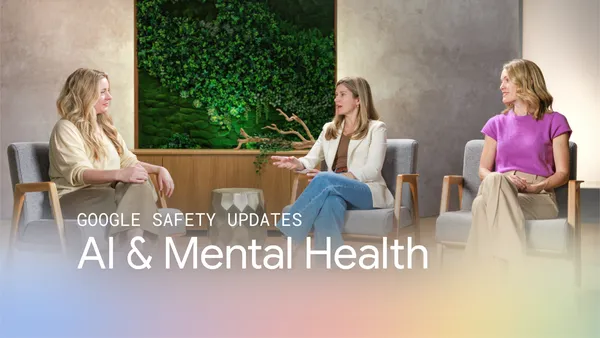 We’re sharing an update on our mental health work, including some new changes to better connect people with the right information.
We’re sharing an update on our mental health work, including some new changes to better connect people with the right information.
We’re sharing an update on our mental health work, including some new changes to better connect people with the right information.
The ChromeOS Stable channel is being updated to OS version 16581.54.0 (Browser version 146.0.7680.184) for most ChromeOS devices.
Visit our ChromeOS communities
General: Chromebook Help Community
Beta Specific: ChromeOS Beta Help Community
Interested in switching channels? Find out how.
Luis Menezes
Google ChromeOS
We're excited to announce the launch of the new Google Advertising and Measurement Developers Hub!
Whether you're looking to automate campaigns, analyze performance, manage tags, or monetize your apps, the new hub is designed to make it easier to find the right tools and information.
We've launched a new technical-user focused site to make it easier than ever for you to find the tools, resources, and support you need to build and innovate with Google's advertising and measurement products.
What's New?
We have created a one-stop shop where you can easily find the resources you need, connect with our team and the community, and get support. Here are some key features:
We're excited to make this the place for you to learn, build, and connect.
Please explore the new site and use the Send Feedback button located at the bottom of each page to share your thoughts!
If you have any questions about this announcement or want to discuss it with our team and the community, please reach out to us on our "Google Advertising and Measurement Community" Discord server.
Happy Building!
 - Aalap Shastri, Google Ads API Team
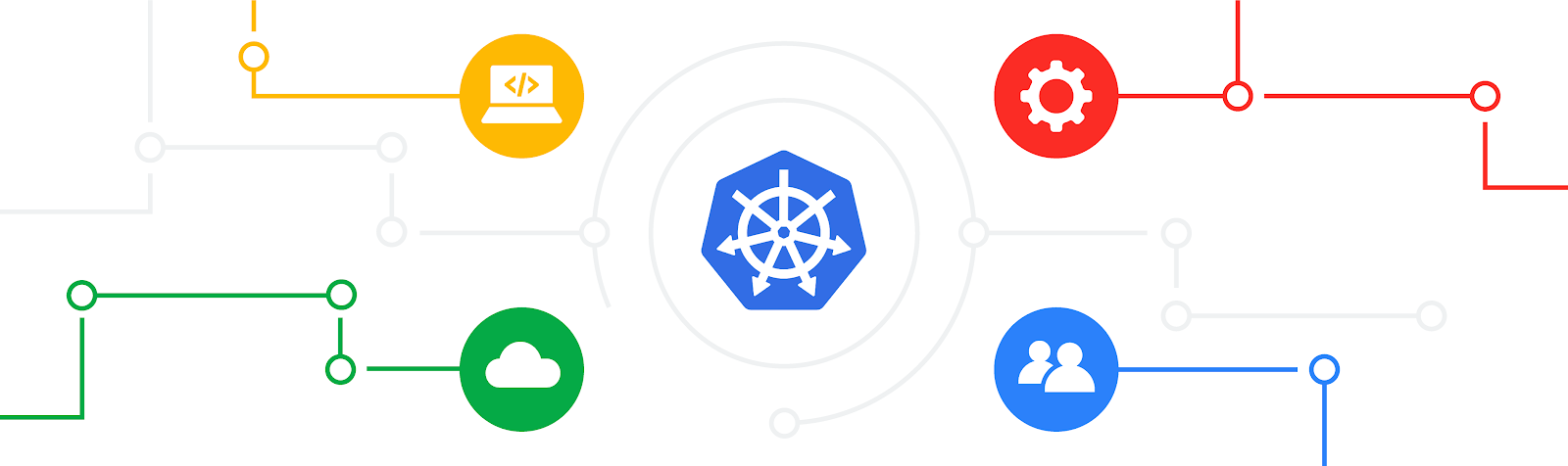
As AI workloads move from experimental notebooks into massive production environments, the industry is rallying around a new standard to ensure these workloads remain portable, reliable, and efficient.
At the heart of this shift is the launch of the Certified Kubernetes AI Conformance program.
This initiative represents a significant investment in common, accessible, industry-wide standards, ensuring that the benefits of AI-first Kubernetes are available to everyone.
Traditional Kubernetes was built for stateless, cloud-first applications. However, AI workloads introduce unique complexities that standard conformance doesn't fully cover:
The AI Conformance program acts as a superset of standard Kubernetes conformance. To be AI-conformant, a platform must first pass all standard Kubernetes tests and then meet additional requirements specifically for AI.
The Kubernetes AI Conformance program is being driven in the open via the AI Conformance program. This cross-company effort is led by industry experts Janet Kuo (Google), Mario Fahlandt (Kubermatic GmbH), Rita Zhang (Microsoft), and Yuan Tang (RedHat). This program is a collaborative effort within the open source ecosystem, involving multiple organizations and individuals. By developing this program in the open, the community ensures the standard is built on trust and directly addresses the diverse needs of the global ecosystem. The program establishes a verified set of capabilities that platforms across the industry, like Google Kubernetes Engine (GKE) and Azure Kubernetes Service (AKS) are already adopting.
DRA is the cornerstone of the new standard. It shifts resource allocation from simple accelerator quantity to fine-grained hardware control via attributes. For data scientists, this means they can now request specific hardware based on characteristics such as memory capacity or specialized capabilities, ensuring the environment perfectly matches the model's needs.
Distributed training jobs often face "deadlocks" where some pods start while others wait for resources, wasting expensive GPU time. AI Conformance mandates support for solutions like Kueue, allowing developers to ensure a job only begins when all required resources are available, improving cluster efficiency.
Conformant clusters must support Horizontal Pod Autoscaling (HPA) based on custom AI metrics, such as GPU or TPU utilization, rather than just standard CPU/memory. This allows clusters to scale up for heavy inference demand and scale down to save costs when idle.
To manage AI at scale, you need deep visibility. The program requires platforms to expose rich accelerator performance metrics directly, enabling teams to monitor inference latency, throughput, and hardware health in a standardized way.
The launch of AI Conformance is just the beginning. As we head further into 2026, the community is adding automated testing for certification and expanding the standard to include more advanced inference patterns and stricter security requirements.
The ultimate goal? Making "AI-readiness" an inherent, invisible part of the Kubernetes standard.
To get involved and help shape the future of AI on Kubernetes, consider joining AI Conformance in Open Source Kubernetes. We welcome diverse perspectives, as your expertise and feedback are crucial to building a robust and inclusive standard for all.
 Today, because of the expiry of the ePrivacy derogation enabling the use of technology to detect child sexual abuse material (CSAM), Europe risks leaving children across…