The Stable channel has been updated to 151.0.7922.75/.76 for Windows and Mac and 151.0.7922.75 for Linux, which will roll out over the coming days/weeks. A full list of changes in this build is available in the Log
Daniel Yip
Google Chrome
The Stable channel has been updated to 151.0.7922.75/.76 for Windows and Mac and 151.0.7922.75 for Linux, which will roll out over the coming days/weeks. A full list of changes in this build is available in the Log
Daniel Yip
Google Chrome
Last year, we launched Gemini in Google Classroom to help educators save time on planning and create more engaging lessons, and later expanded Gemini in Classroom to higher education students 18 years of age and older to help them study and learn. Starting August 10, 2026, Gemini in Classroom will also be made available to K-12 and higher education students of all ages who have already been granted access to Gemini in Classroom, Gemini and Gemini Notebook by their admin, offering a guided space to interact with these tools.
In Classroom, students can access the Gemini tab to transform their class materials into interactive experiences that help them study and learn. For example, students who have access to Gemini can select course materials to create flashcards or practice quizzes with Gemini that are tailored to their class. Students with Gemini Notebook access can also sync the materials provided by their teacher to Gemini Notebook, enabling them to create interactive study guides, audio overviews, infographics, and more.
Additionally, starter prompts on the student Gemini tab can now use context from Classroom to tailor Gemini interactions specifically to students’ schoolwork. This update transforms the existing starter prompts into highly contextualized experiences, eliminating the need to go back and forth between Classroom and Gemini to get support relevant to what they’re learning in the classroom.
When a student clicks on one of these starter prompts, a new box now appears that allows them to select a specific class and assignment. The Gemini prompt will then incorporate the relevant title, assignment instructions, and curriculum materials as context directly from Google Classroom, ensuring that the resulting interaction is grounded in the student’s academic context.
If Gemini in Classroom and the Gemini app are enabled, students will also be able to access “Learn with Gemini” when they hover over any assignment in “Due Soon” on the redesigned Classroom homepage. “Learn with Gemini” helps students get guided help or create study guides, practice quizzes, and flashcards – all based on their class curriculum.
Access to the Gemini tab in Classroom is currently available globally in all Classroom-supported languages in which Gemini is also available.
Admins:
![]() |
Promotional pricing on internet service is designed to look like a great deal. It often isn't. Customers who choose a low introductory rate routinely pay more per month on average overall than customers who chose straightforward pricing from day one.
How promotional pricing works
Many major internet providers advertise a rate that applies only to new customers for some limited amount of time, typically 12 to 24 months. The promotional rate often appears in ads, mailers, and search results, and may not include taxes and fees. But, even if it’s a great price for that short period, the standard rate activates automatically when the promotional period ends. And, according to HighSpeedInternet.com, these standard rates can be up to more than $70 higher per month, and usually both the amount and the timing is tucked away in the fine print.
These rates can come with other requirements as well. Some providers bundle the promotional rate with a TV or phone package. The bundle lowers the apparent monthly cost, but the discount is temporary, and customers often continue paying for service they don't use long after the promotional period ends. Or they can represent guaranteed pricing like a multi-year price lock. Advertising like "your price won't change for 5 years" sounds reassuring. But these promotions frequently exclude equipment rental fees and broadcast TV surcharges. And of course, when the lock expires, standard rates apply.
Three promotions to watch out for
There are three common advertising approaches that some internet providers use to attract new customers, but it pays to read the fine print.
Introductory rates. Advertisements often promise fast internet starting at a low monthly rate, but the asterisk usually leads to a "for 12 months" disclaimer. After that, the price jumps to the standard rate. When you add a monthly equipment rental fee and a one-time installation or activation charge, your average monthly cost climbs significantly.
Bundles. Bundle promotions reduce the individual price of each service only while the bundle remains active. When the promo ends, each component usually reverts to its standard rate. Customers who decide to drop TV from the bundle often discover that the internet-only rate is higher than what they were paying for the entire bundle before.
Price locks. A limited-time price lock can look competitive, but it’s important to read the fine print. Price locks typically exclude other essential fees like equipment and may only apply to select speeds. When the lock ends, the standard rate kicks in, often requiring customers to call customer service to negotiate a new discount.
Once the promotional period ends, the standard rate kicks in automatically, and customers pay a significantly higher price per month than what they signed up for.
But GFiber’s transparent pricing policy is designed so you always know exactly what you're going to pay. Our products are priced at a flat rate every month with no hidden fees. There are no expiring introductory rates to worry about, confusing bundles to manage, or price locks to negotiate. What you see when you sign up is what you can expect.
The GFiber difference: transparent, all-inclusive pricing
GFiber uses an all-inclusive pricing structure designed to remove any pricing uncertainty for our internet products. For example, the GFiber Core 1 Gig plan is $70 per month.[1] This straightforward rate includes professional installation and your Wi-Fi hardware (including router and up to extenders as needed[2]), with no promotional expiration dates, no data caps, and no unexpected rate hikes down the road. And that price hasn’t changed since we launched it in KC in 2012.
This commitment to a truly great customer experience is a primary reason why GFiber has been awarded #1 in Customer Satisfaction for Residential Wired Internet Service in the South Region by J.D. Power for three consecutive years.[4] Customers know exactly what they will pay every single month and never have to spend their valuable time negotiating with customer service over an unexpected increase on their bill.
The real cost of chasing a deal
The lowest advertised rate is rarely the lowest long-term cost. Introductory pricing, bundle discounts, and multi-year locks all share a compelling number up front and an inevitably higher number down the road. Coupled with the frustration of not realizing your bill went up, having to call to request the original price you signed up for, seeing new customers get a better deal than you, these lower priced deals are seldom worth it in the long run.
The internet is an essential monthly expense. That’s why our suite of lifestyle internet products is built around how you use the internet, like GFiber’s Core 1 Gig for $70. Every month. No negotiating required. Because with GFiber, the price you see when you sign up is exactly what you can expect month after month, year after year.
Footnotes and Disclaimers
[1] Pricing & Service: Upload/download speed and device streaming claims are based on maximum wired speeds. Actual internet speeds, Wi-Fi speeds, and Wi-Fi coverage are not guaranteed and can vary based on factors such as home or business size and layout, construction materials, hardware and software limitations, latency, packet loss, etc. Advertised prices do not include local access fees, which go back into your community, or taxes, both of which may be subject to increase.
[2] Customers canceling service will have to pay a replacement fee (including any applicable taxes) if they fail to return equipment within 60 days after cancellation.
[3] J.D. Power Award: GFiber received the highest score in the South region of the J.D. Power 2023-2025 U.S. Residential Internet Service Provider Satisfaction Studies, which measures customers’ satisfaction of service with their current internet. Visit jdpower.com/awards for more details.
There are several ways to connect your home to the internet today, and each comes with its own set of performance standards. GFiber runs on an entirely fiber-optic network built to deliver high symmetrical speeds, low latency, and reliable performance directly to your home. Additionally, GFiber proactively improves network technology across active service areas to align with modern bandwidth demands.
Understanding internet connection types
Most households connect to the internet via fiber, cable, DSL, fixed wireless 5G, or satellite. The structural performance of these formats varies based on physics and network materials. Here’s how they break down:
Fiber-optic technology: Fiber carries data as pulses of light through glass. Fiber-optic technology allows signals to travel faster than electrical currents. Fiber networks run fiber-optic cable from a central facility directly to your home.
Cable internet infrastructure: Cable usually runs on hybrid fiber-coaxial (HFC) networks. While fiber may carry data to a neighborhood node, coaxial cable handles the final leg of the journey to the home and uses copper cable and electrical signals
DSL networks: DSL uses traditional copper telephone lines. Because of the limitations of copper, signal quality and speed often drop the further you are from the provider’s central office.
Fixed wireless 5G: Fixed wireless 5G connects homes using the same radio spectrum as mobile cellphone networks. Data travels from nearby cell towers to a receiver installed at your home.
Satellite infrastructure: Satellite uses radio waves beamed from space to a home dish. While satellite reaches remote areas, weather can affect signal quality and offered speeds are often lower.
Which internet connection is right for you?
Selecting an internet format depends on your specific performance needs and local network availability. For those on the fence about which type of internet would work best for them, it’s worth noting that according to an editorial analysis from CNET, "Google Fiber raises the bar for fiber internet service."[1]
Additionally, CNET editors note that "You can expect fully symmetrical speeds and a reliable connection." Symmetrical architecture balances your network link, providing identical performance lanes for both downloading and uploading data.
GFiber's XGS-PON and 25G PON network technology
GFiber operates two advanced technologies—XGS-PON and 25G PON—simultaneously. By deploying both systems on the same physical infrastructure, GFiber has already prepared our network for the increasing internet demands of multimodal AI environments, immersive video streaming, and advanced cloud computing.
XGS-PON powers our current residential products. Core 1 Gig, Home 3 Gig, and Edge 8 Gig all run on this 10 Gbps symmetrical fiber platform, which serves the majority of our customers today.
25G PON is our next-generation layer. GFiber has been deploying this technology since 2023. Ninety percent of homes and businesses in our network footprint are now 20 Gig capable. To unlock this capacity, a technician installs a new optical network terminal (ONT) inside the home without the need to dig new street trenches. Because this updated technology uses already deployed fiber lines, GFiber increases total network capacity through hardware and software updates rather than disruptive neighborhood construction.
Today, GFiber operates an all-fiber network in 19 states and counting. See if GFiber is available in your neighborhood at gfiber.com.
Footnotes and Disclaimers
[1] CNET Award Attribution: CNET: Best No Contract ISP 2025 Overall Winner. Reprinted with permission. © 2025 Ziff Davis, LLC. All Rights Reserved. "Google Fiber raises the bar for fiber internet service." "You can expect fully symmetrical speeds and a reliable connection."
[2] Upload/download speed and device streaming claims are based on maximum wired speeds. Actual internet speeds, Wi-Fi speeds, and Wi-Fi coverage are not guaranteed and can vary based on factors such as home or business size and layout, construction materials, hardware and software limitations, latency, packet loss, etc.
Hi everyone! We've just released Chrome Stable 151 (151.0.7922.105) for iOS; it'll become available on App Store in the next few hours.
This release includes stability and performance improvements. You can see a full list of the changes in the Git log. If you find a new issue, please let us know by filing a bug.
Chrome Release Team
Google Chrome
Here are Google’s latest AI updates from July 2026

The Google Ads API is piloting a security feature designed for securing API access to Google Ads manager accounts. We are seeking developers who would like to participate in this pilot project and provide us with feedback.
What are we offering?
The new pilot program protects accounts under a Google Ads manager hierarchy by restricting access to sensitive API methods such as account management, user management, and billing API calls to a pre-approved allowlist of Google Cloud projects. This happens in the following phases:
After the Google Ads manager account is secured, any unapproved application that tries to make sensitive API calls to any account under the protected manager account will fail.
This security measure provides benefits:
How do I join this program?
To participate in this program, express your interest by filling out the application form. You should provide your contact email address and the customer ID of the top-level Google Ads manager account that you want to secure. If Google selects your account for participation in the pilot program, then we will reach out to you using the email address you provided, and list the next steps required to secure the accounts under your Google Ads manager account under this pilot program.
If you are participating in this program and want to allowlist a new application to make sensitive API calls to the accounts under the protected Google Ads manager account, let us know the Google Cloud project number of the application by filling out the form. If you don’t have these details, you can reach out to your application developer for this information. Google will make the necessary changes within 10 business days and let you know.
How do I stop participating in this program?
If you are participating in this program and want to stop your participation, contact Google Ads API support using the same email address you used when signing up for this program and let us know the reason why you are opting out of this program. Google will make the necessary changes within 10 business days and let you know.
What happens if I unlink an account from a protected top-level manager account?
If you unlink an account from the hierarchy under a protected top-level manager account the account loses the API protection offered under this program.
What happens if I link a new account under a protected top-level manager account?
If you link an account under the hierarchy of a protected top-level manager account, the newly linked account will inherit the protection from the top-level manager account. In addition, if a newly linked account has existing applications, but those applications are not already authorized by the manager account, they might fail and may need to be authorized.
If you have more questions about this pilot program, you can contact support.
The Beta channel has been updated to 152.0.7977.13 for Windows, Mac and Linux.
A partial list of changes is available in the Git log. Interested in switching release channels? Find out how. If you find a new issue, please let us know by filing a bug. The community help forum is also a great place to reach out for help or learn about common issues.
Chrome Release Team
Google Chrome
Even as AI adoption accelerates and transforms the global technology landscape, open source remains foundational to how Alphabet builds, uses, and collaborates on products for billions of users. Our commitment to open source remains broad and consistent, including sharing our work year-over-year, and reflecting on what we've learned.
In 2025:
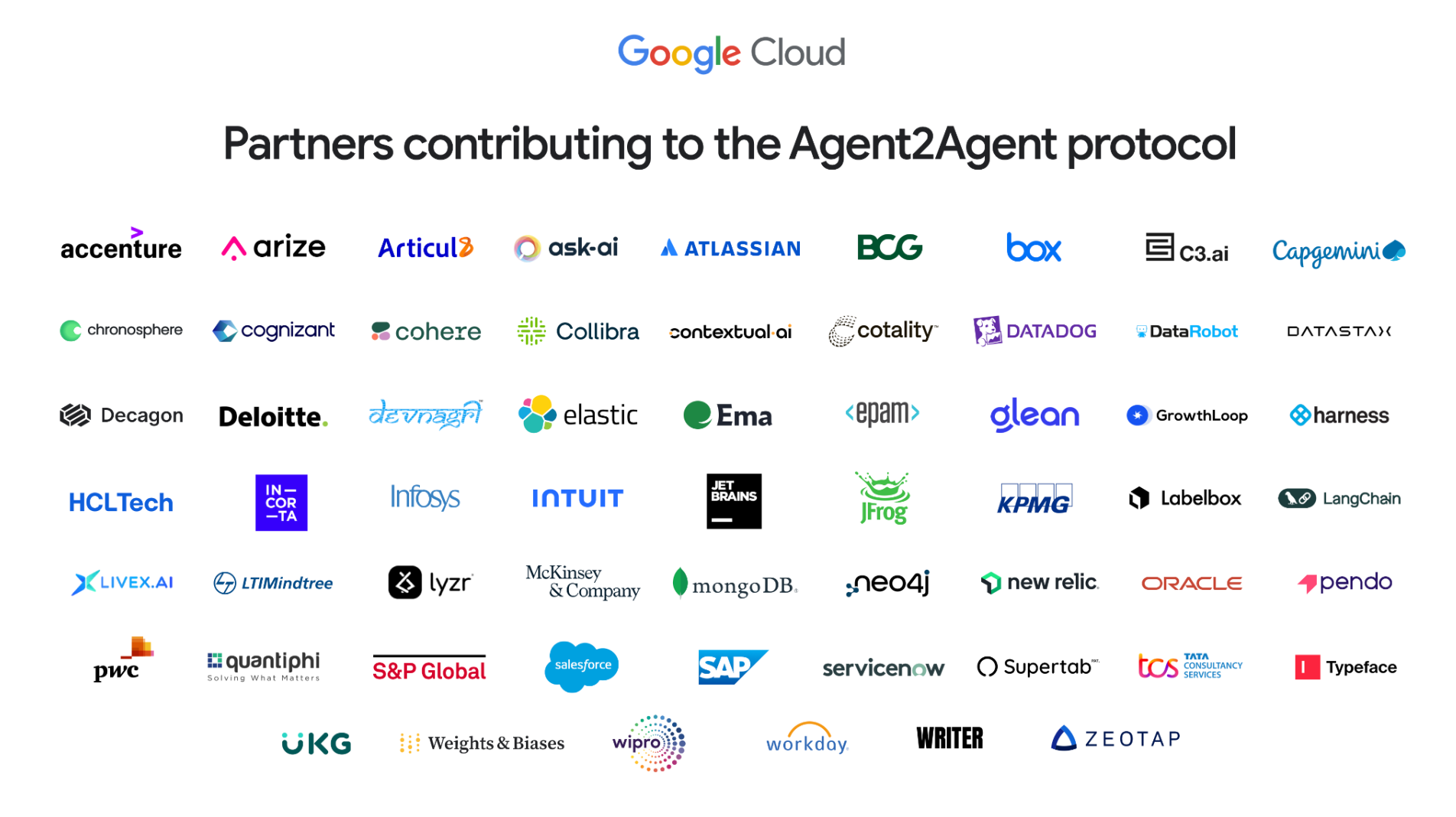
Open source communities continue to provide vital collaborative spaces to define emerging standards, ensuring the interoperability and extensibility for the next generation of technologies. In 2025, we worked with more than 50 partners on the Agent2Agent (A2A) protocol to enable AI agents to communicate with each other, securely exchange information, and coordinate actions on top of various enterprise platforms and applications. Within weeks of our initial announcement, Google donated the A2A project to the Linux Foundation as part of our long-standing commitment to develop "open, collaborative ecosystem – offering greater autonomy and multiplying productivity."
Open source licenses provide a framework for anyone to explore, test, fork and expand on our technologies. Over the last 15 years, Google has created more than 15,000 public repositories on GitHub. Today, Google continues to maintain more than 5,000 public repositories on GitHub, and more than 1,500 public repositories on Git-on-Borg. A quick look back to some highlights from our 2025 launches includes:
As the threat landscape evolves and accelerates in the AI era, we are working on novel solutions to mitigate vulnerabilities at scale and remove some of the burden from overloaded maintainers. In 2025, we introduced several critical security initiatives to support upstream open source projects:
Beyond security contributions, we remain committed to providing financial support directly to projects and maintainers. In 2025, the Open Source Programs Office (OSPO) directed $2M in sponsorships and investments to more than 40 open source projects.
Google Summer of Code celebrated its 21st year of enabling open source organizations to find, mentor, and onboard new contributors, directly supporting 1,280 individuals to contribute to 185 organizations. Over its lifetime, the global program has connected more than 23,000 participants from 125 countries with over 1,000 open source organizations globally. Moving forward, we recognize the need to evolve our program structures to ensure they continue to effectively support maintainers in the AI era.
Respecting community norms and practices is fundamental to establishing and maintaining trust in open source communities. To ensure we remain supportive members of your community, we encourage projects to document preferred practices and policies in the wake of new technologies. As AI changes the way we work, we are continually evaluating how best to evolve the way we engage in open spaces to preserve, prepare and bolster the communities we depend on.
We are deeply grateful for the many individuals and organizations that have worked with us to create global technologies from which everyone can benefit. You can continue to learn more about our open source initiatives, ongoing programs, and new projects at opensource.google.
This report features metrics provided by many teams and programs across Alphabet. In regards to the code and code-adjacent activities data, we wanted to share more details about the derivation of those metrics.