Data regions are critical for helping organizations meet internal compliance, legal, regulatory, and data sovereignty obligations by controlling the geographic location of covered data at rest and through data processing. Expanding these controls to Apps Script allows organizations—including those in highly regulated industries and the public sector—to build, deploy, and automate enterprise workflows with confidence that their script data and executions remain within designated geographic boundaries.
When a data regions policy is applied to an organizational unit or group, Apps Script data storage and runtime execution adhere to the specified region:
- Data at rest: Script project files, code definitions, manifest configurations, trigger metadata, and key-value storage (such as Property Service and Cache Service) are stored within the designated geographic region.
- Data processing: Script executions, container-bound automations, and associated runtime operations are processed within the selected region.
Note on non-regionalized services:
As Google Apps Script transitions to a regionalized data residency model, non-regionalized Apps Script services will be disabled starting in September 2026 for organizations that turn on the Drive and Docs disablement toggle in data regions advanced settings in the Admin console. Learn more about disabling non-regionalized services.
 |
| Enabling Data regions support for Apps Script (Under Drive & Docs) |
Getting started
- Admins: Apps Script automatically adheres to your existing organizational data location policies configured in the Admin console under Menu > Data > Compliance > Data Regions.
- End users: There is no end user setting for this feature. Script project creation and executions will automatically follow the data region policy assigned to the user by their administrator. For custom cloud logging and external services, developers can review recommendations in the Apps Script Cloud Projects guide.
Rollout pace
Availability
- Enterprise: Enterprise Plus (provides in-region data storage and processing)
- Education: Education Standard and Education Plus (provides in-region data storage only)
- Other Editions: Frontline Plus (provides in-region data storage and processing)
Resources
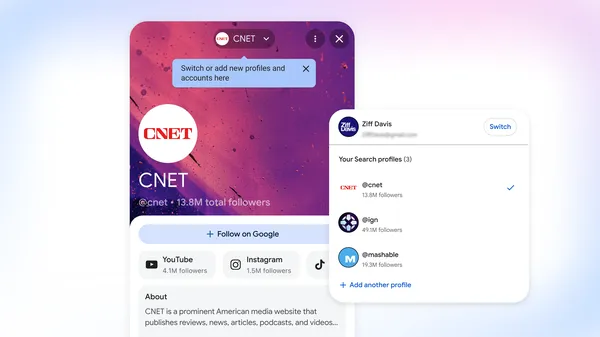 Search profile updates help publishers better highlight their content and connect with their audiences.

 Findings from our research with RXN Group show teens are thoughtful and curious about AI.
 Help boost holiday sales with agentic commerce updates and product feed best practices from Google.
 At Rethink 2026, we’re helping marketers prepare for the holiday season with new ways to connect with customers and boost ROI.
 Our latest carbon removal agreement delivers both immediate and permanent climate benefits.

 Our new Chicago office at Thompson Center brings together art, community and architecture.